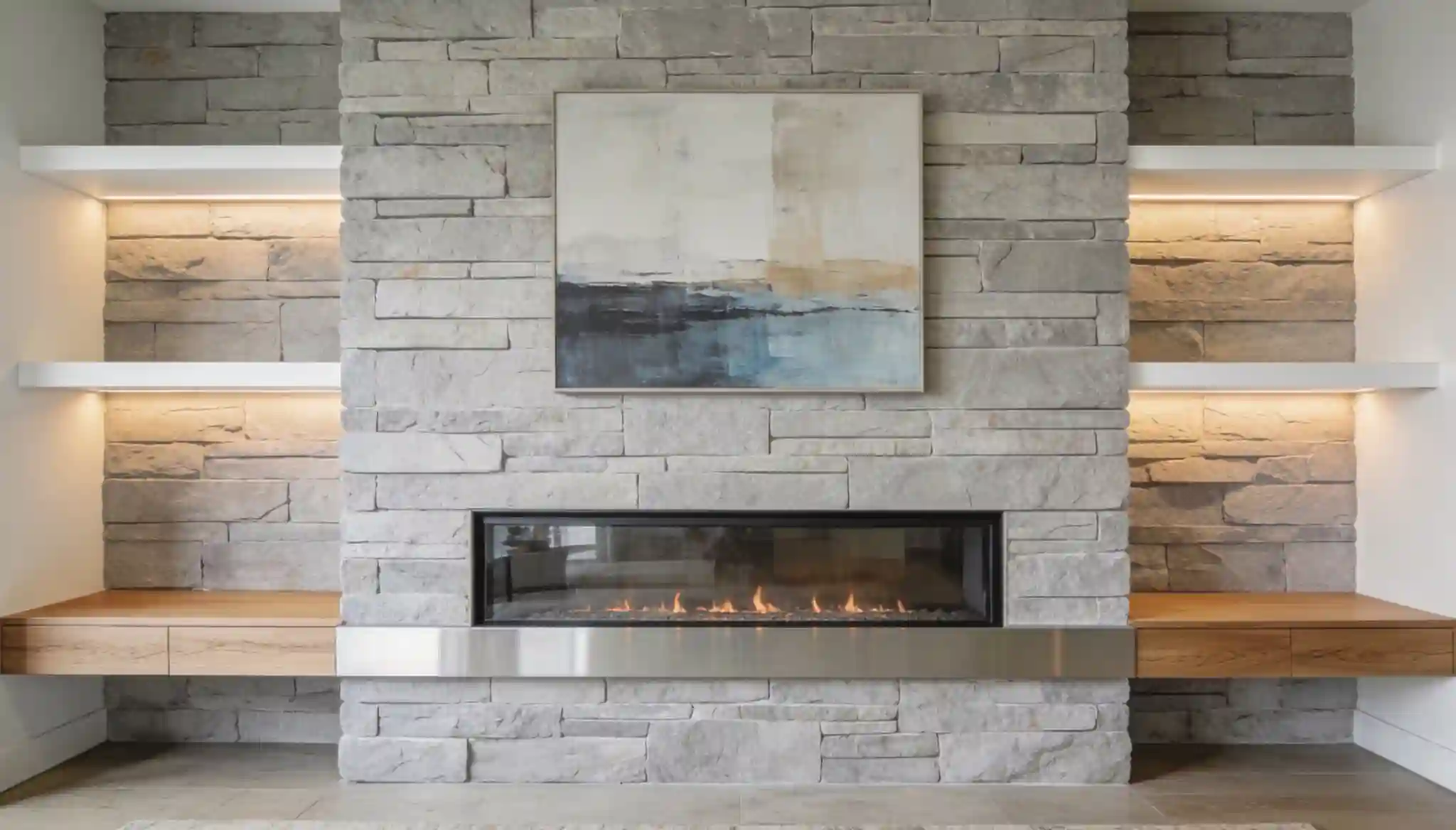
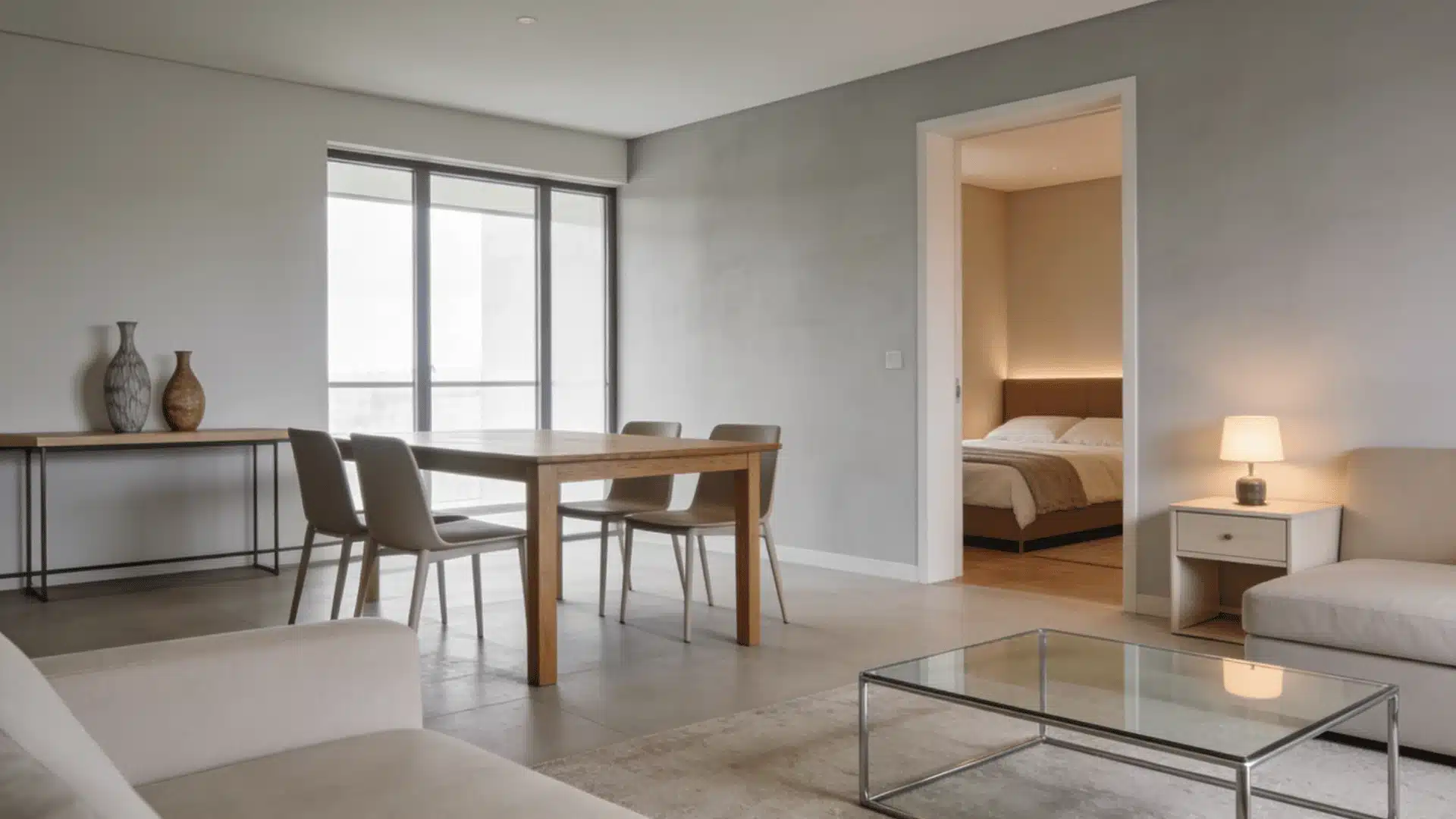
A table does a lot of quiet work in a room.
It holds a morning coffee, anchors a dining space, keeps a bedside lamp within reach, and fills an entryway with purpose.
But not every table suits every space, and the wrong choice tends to show fast.
From dining tables to nested coffee tables to slim console pieces, each type is built around a specific need.
Here is a closer look at the most common types of tables and what sets them apart.
Which Table Shape is Best?
Table shape affects how a room feels and how well the table functions day to day. The right shape depends on room size, seating needs, and how the space is used.
Common table shapes and what they work best for:
- Rectangle: Seats more people and fits well in longer rooms. The most common choice for dining and office tables.
- Round: Works well in smaller rooms and makes conversation easier across the table. No sharp corners, which helps with movement.
- Square: Suits compact dining areas and works well when seating four people evenly. Can feel too bulky in narrow rooms.
- Oval: Similar to rectangular but with softer edges. A good option for rooms where traffic flow around the table matters.
Quick Comparison
| Shape | Best For | Room Size | Seating |
|---|---|---|---|
| Rectangle | Dining, work, large gatherings | Medium to large | 4 to 10+ |
| Round | Small dining, casual spaces | Small to medium | 2 to 6 |
| Square | Compact dining, cafe style | Small | 2 to 4 |
| Oval | Dining with softer layout | Medium to large | 4 to 8 |
The Most Common Types of Tables
Tables come in more varieties than most people stop to think about.
Each type is built around a specific function, and understanding those differences makes it easier to choose the right one for any room in the home.
1. Dining Table
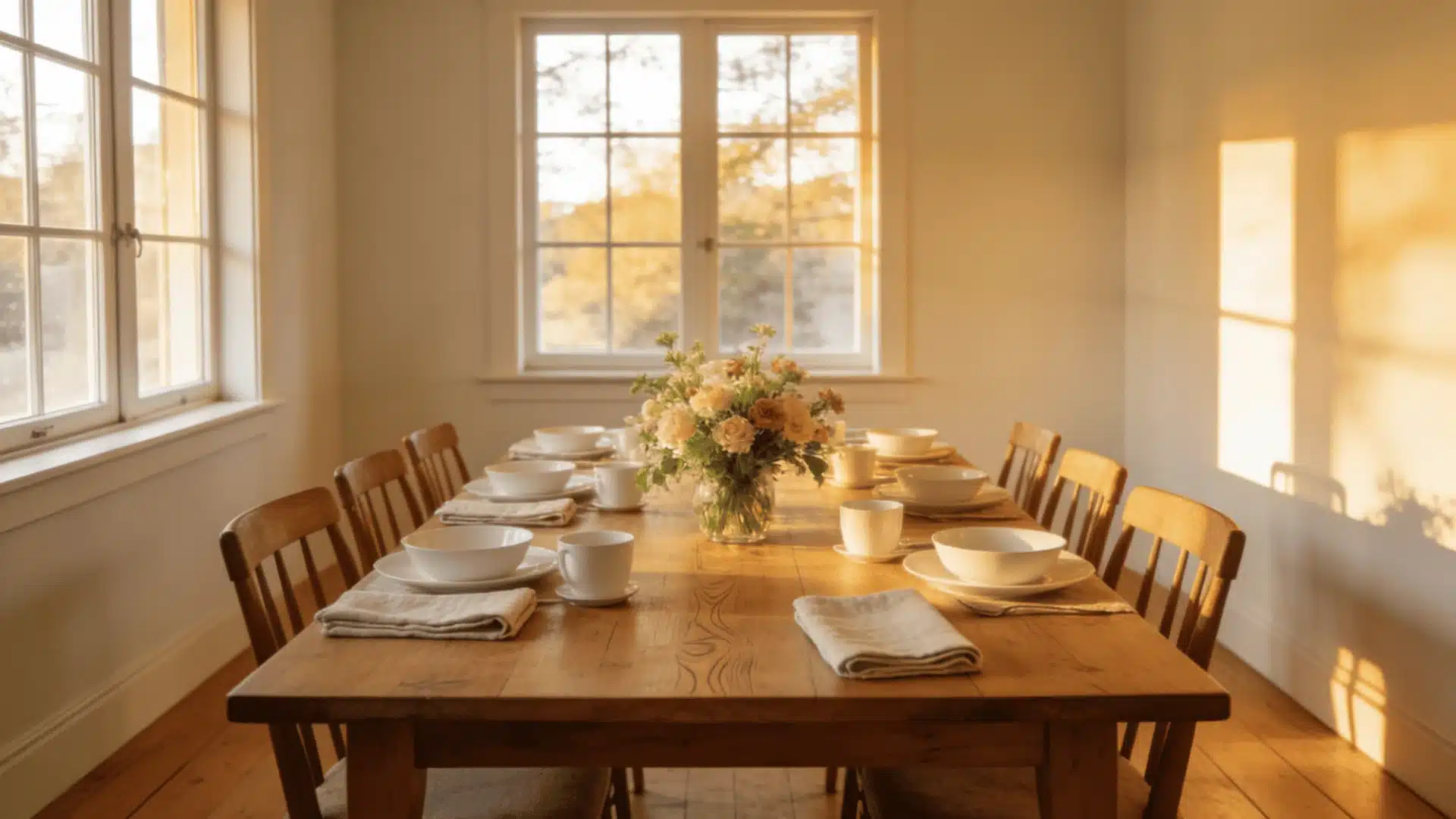
Most dining tables get used harder than any other piece of furniture in the house — meals, homework, late conversations, and anything that needs a flat surface big enough to spread out on.
Choosing the right one depends on your space, the number of people in your home, and how you plan to use it day to day.
A rectangular table works well in longer rooms and seats more people comfortably. A round table suits smaller dining areas and makes it easier for everyone to talk across the table.
If your space is tight, an extendable dining table is worth considering since you can expand it only when needed.
Common materials for dining tables include:
- Solid wood, which is durable and ages well, but it may need occasional oiling or refinishing
- Engineered wood, which is more budget-friendly but can be sensitive to moisture over time
- Glass, which keeps a room feeling lighter but shows fingerprints easily
- Marble and stone, which look striking but are heavier and require sealing to prevent staining
For homes with children, a table with a matte or textured surface tends to hide everyday wear better than a high-gloss finish.
Oak and walnut are the two solid wood options that consistently hold up well in busy households. Both take scratches without showing them the way lighter woods do.
2. Bedside Table

A bedside table holds your phone charger, a glass of water, a book, and anything else you want within reach at night.
The surface should sit close to the top of your mattress so you are not reaching up or down awkwardly. Most bedside tables fall between 24 and 28 inches tall, but measuring your bed height before buying is always a good idea.
Storage makes a practical difference here. A table with a drawer is useful if you want to keep things out of sight.
Open shelving works well if you prefer easy access to books or a lamp. In a minimal room, a small stool or a wall-mounted shelf can serve the same purpose when floor space is limited.
Materials for bedside tables range from wood and MDF to metal and rattan.
Rattan and cane options have become popular in recent years and can add a lighter feel to a bedroom, though they tend to have fewer storage options.
Tables Built for Specific Situations
Some tables exist to solve a specific problem: a space that is too narrow for a standard piece, a patio that needs something lightweight, a corner that just needs a surface.
3. Outdoor Table
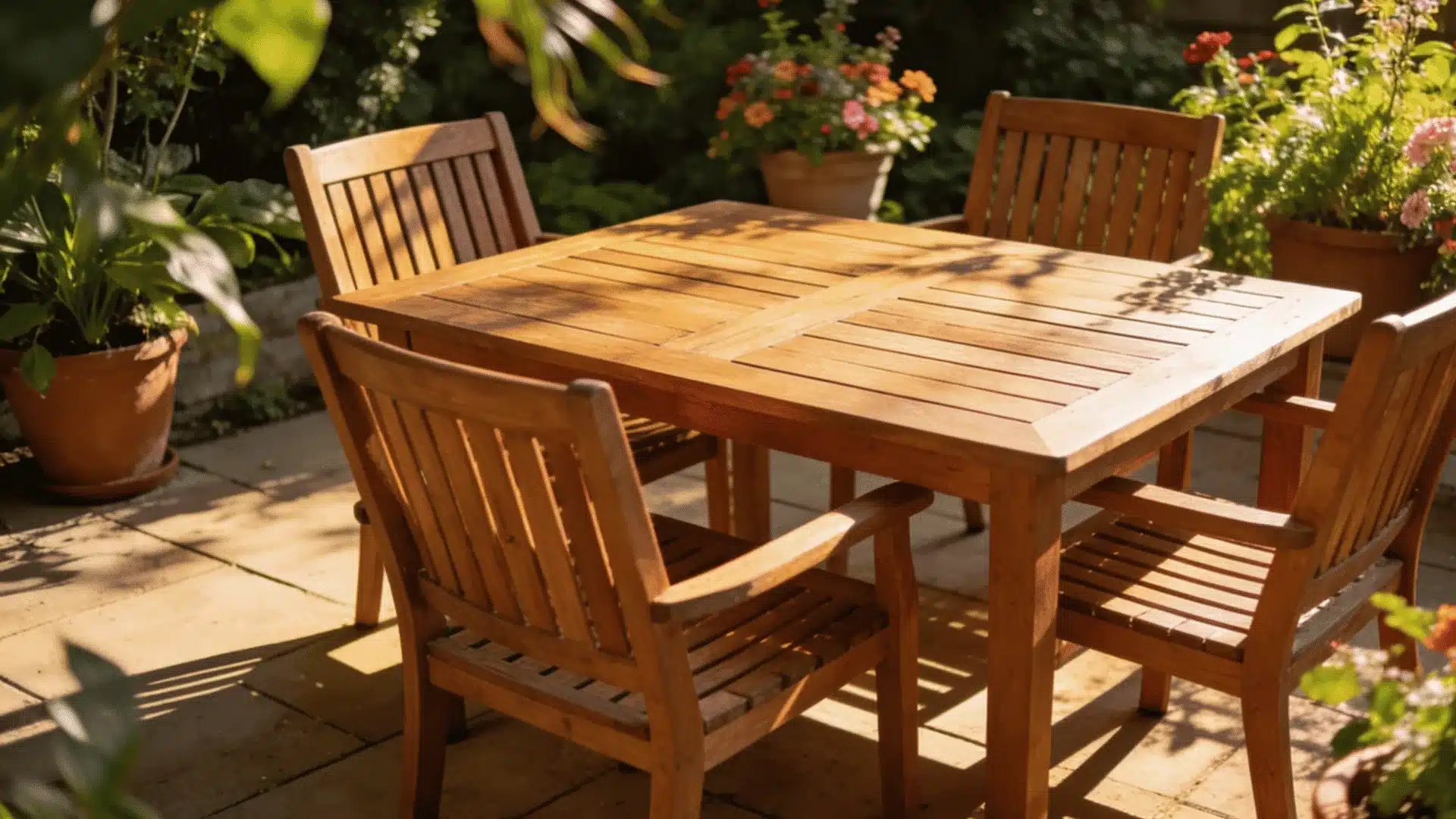
Material is the only thing that matters with outdoor tables.
A piece that works fine indoors will deteriorate within a season if it is not built for weather exposure.
Materials built for outdoor use include:
- Teak, which naturally resists moisture and lasts for years with minimal care
- Powder-coated aluminum, which is lightweight, rust-resistant, and easy to move around
- Resin and polypropylene, which are low maintenance and work well in covered patios
- Concrete and stone, which are heavy and best suited to permanent outdoor setups
A wooden outdoor table will likely need a protective sealant applied every year or two, especially in areas that get heavy rainfall or strong sun.
Skipping that step is one of the most common reasons outdoor furniture deteriorates faster than expected.
Leave enough clearance around an outdoor table so chairs can be pulled out comfortably even when guests are seated.
4. Drink Table
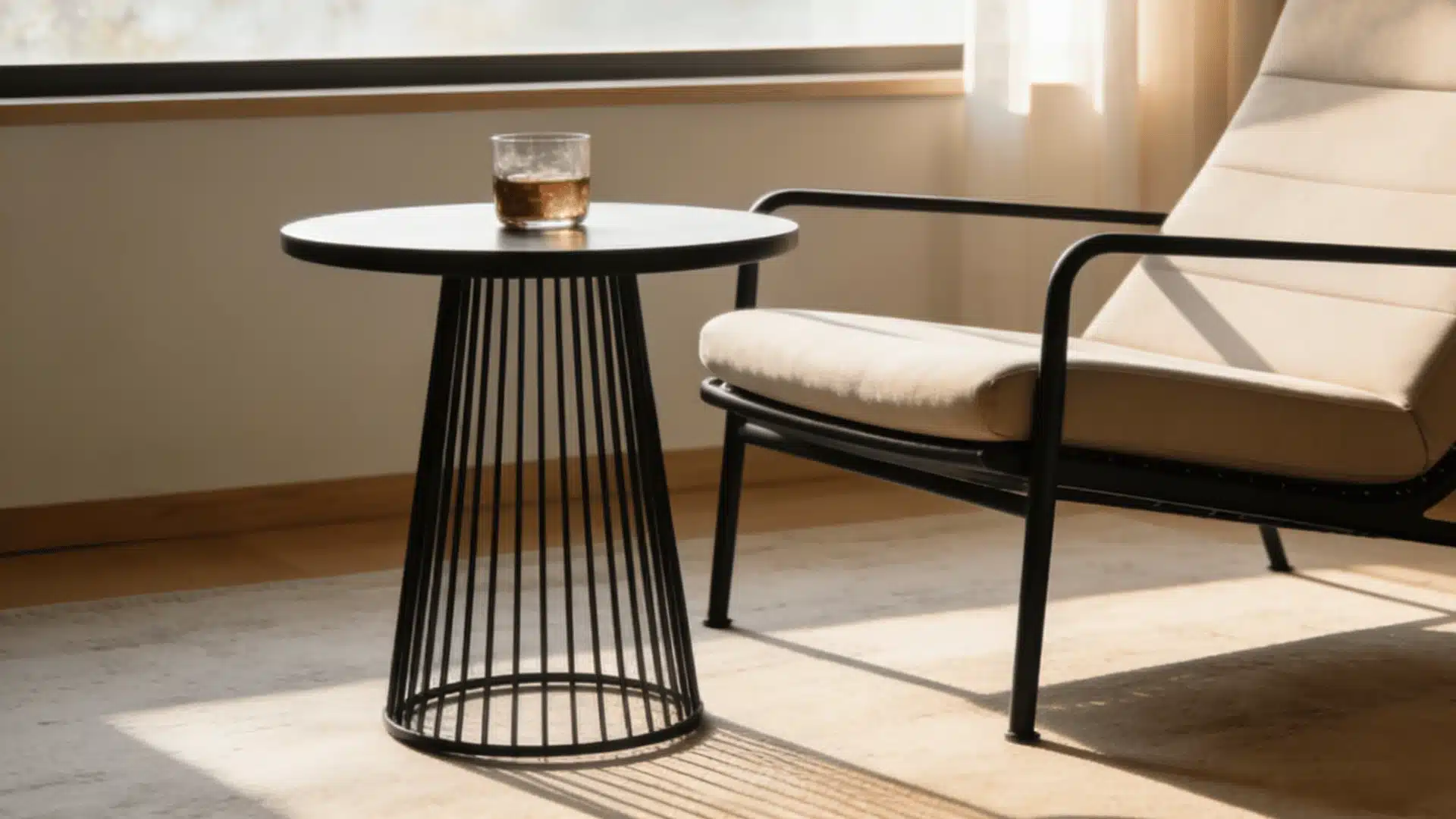
A drink table is a small, usually round table designed to hold a single drink or a small lamp. It does not offer storage or display space. It just handles its job quietly without taking up much floor space.
These work well beside a lounge chair or at the end of a sofa where a full end table would feel too bulky.
They are typically under 20 inches in diameter and can be moved easily when not needed.
Metal and solid wood are the most common materials, and the slim profile means they rarely clash with the rest of the room.
5. Bar and Counter Table
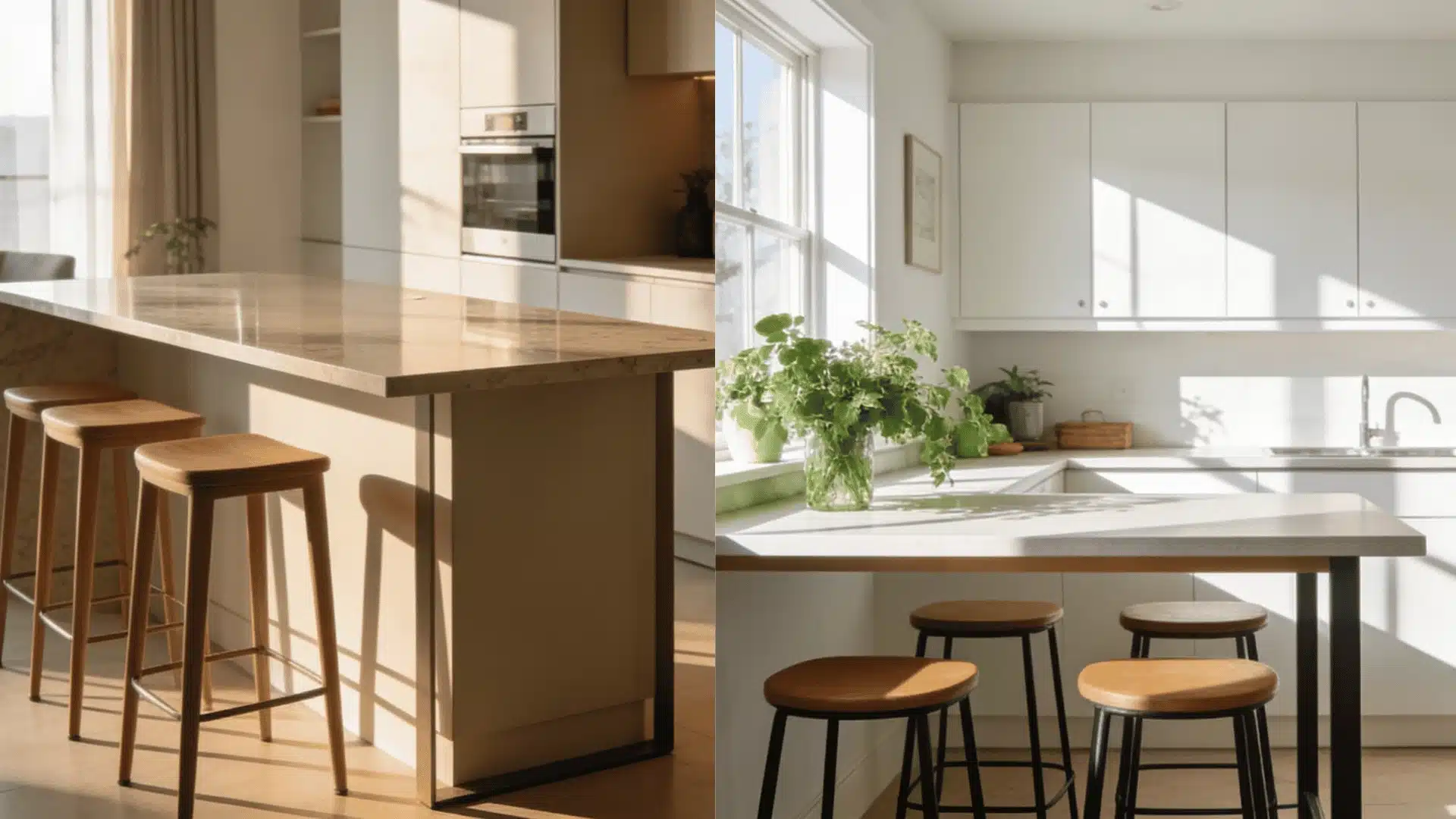
Bar and counter tables are taller than a standard dining table and are designed for casual seating with stools.
A counter-height table typically sits around 34 to 36 inches tall, while a bar-height table is usually between 40 and 42 inches.
These work well in open-plan kitchens, breakfast nooks, and smaller apartments where a full dining setup would feel too heavy for the space.
They also suit home bars or entertainment areas where people tend to stand or move around rather than sit for extended meals.
The stools need to match the table height. A mismatch of just a few inches can make the seating uncomfortable, so confirming the measurements before buying both together saves a return trip.
Types of Coffee Tables
A coffee table sits at the center of most living rooms and gets used constantly. It holds remotes, books, drinks, decorative trays, and anything else that lands in the middle of the room.
The right style depends on your seating layout and how much surface space you actually need.
Leave around 12 to 18 inches between the coffee table and your sofa so there is enough room to move without the table feeling too far away to reach.
6. Round Coffee Table
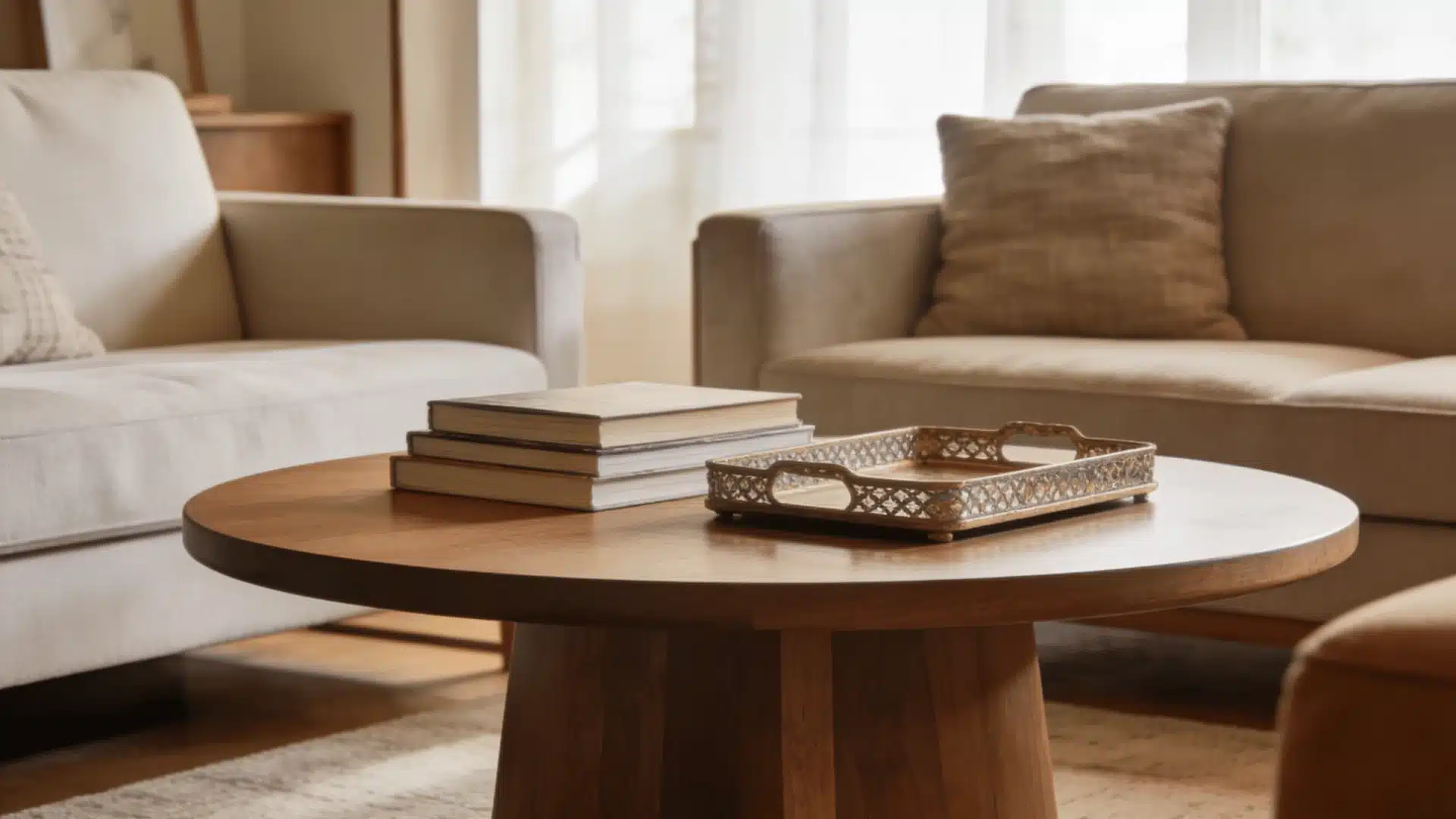
A round coffee table removes sharp corners from a seating area, which makes the space easier to move through.
This is particularly useful in rooms where people frequently walk around the furniture or in homes with young children.
- Works well in smaller or square-shaped living rooms
- Helps improve traffic flow around seating areas
- Some styles include a lower shelf for extra storage
- Pairs well with curved sofas or rounded seating arrangements
The trade-off is surface area. A round table naturally offers less usable surface than a rectangular one of similar diameter, so if you tend to have a lot on your coffee table, a larger round option or a different shape may serve you better.
7. Nested Coffee Table
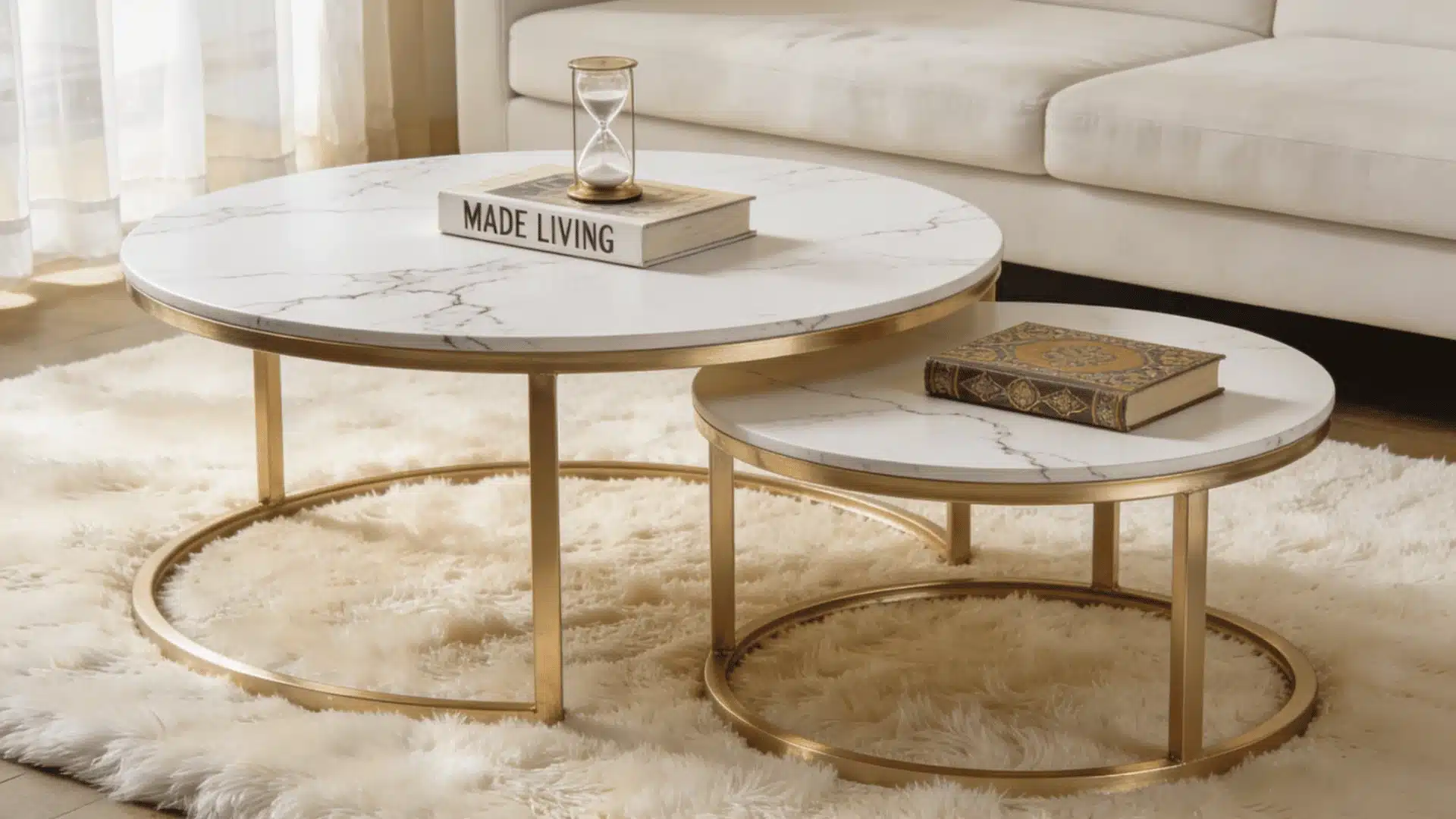
Nested coffee tables are a set of two or three tables that stack together. When you need more surface space, you pull them apart.
When you do not, they sit compactly under each other.
- Useful in multifunctional living rooms where space changes based on how the room is used
- Easy to separate when hosting and tuck away afterward
- A practical option for smaller apartments where flexibility matters
The individual pieces tend to be smaller, so they work better as accent surfaces than as the main table in a large seating arrangement.
Side and Accent Tables
Side and accent tables are the smaller supporting pieces that fill in the gaps around main furniture.
They handle a lot of practical work in a room without drawing much attention.
8. End Table
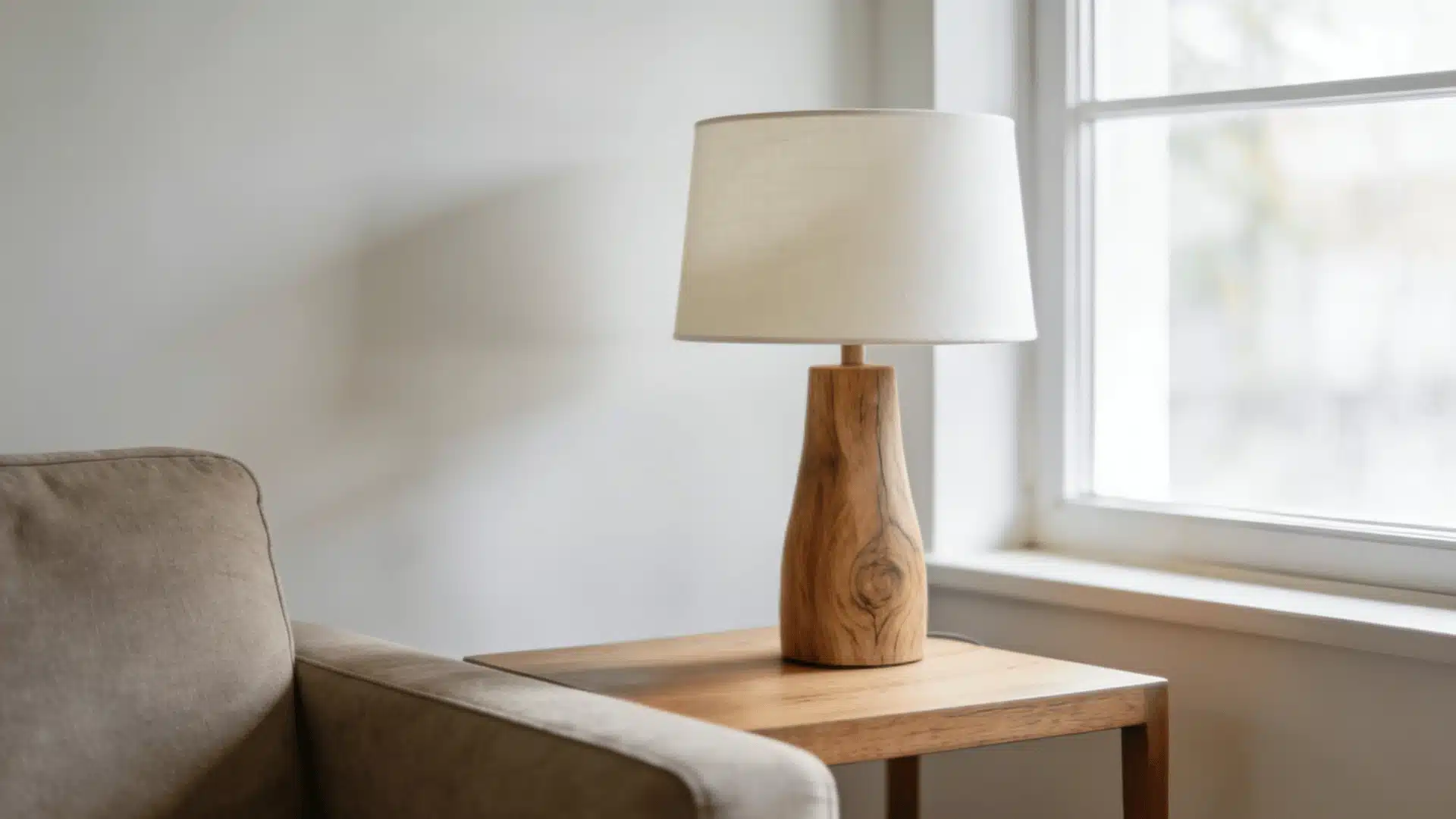
End tables sit beside a sofa or armchair and give you a surface for a lamp, a drink, or whatever you happen to set down.
- Height should roughly match the arm of the sofa it sits beside
- Works as a display spot for a small plant or framed photo alongside practical items
- Available in wood, metal, glass, and combination materials
If you are buying end tables for both ends of a sofa, they do not need to match exactly. A mix of complementary styles or materials often looks more considered than two identical pieces.
9. Console Table
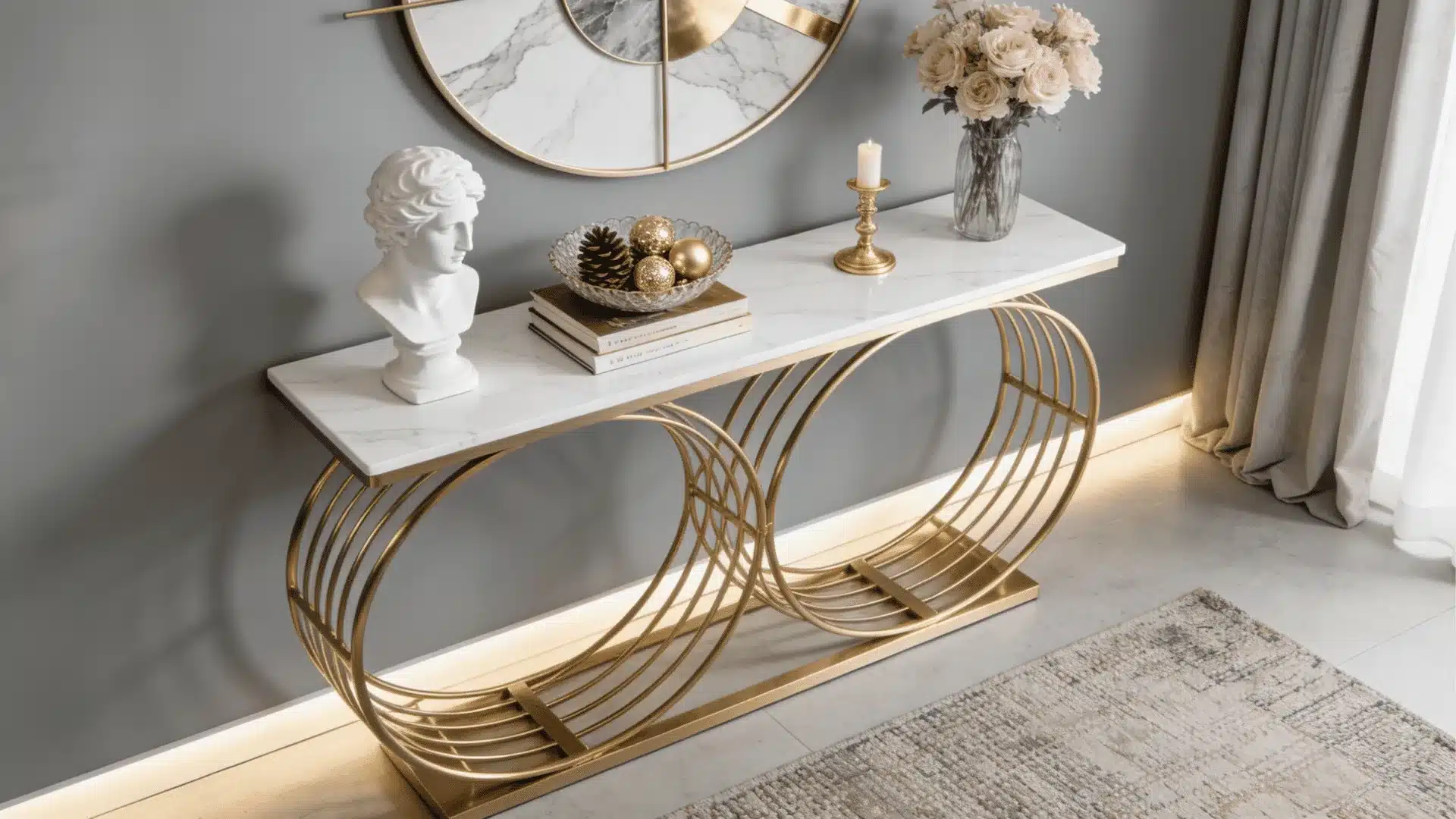
A console table is narrow and long, typically placed against a wall in an entryway, hallway, or behind a sofa. It offers a surface without taking much floor space.
- Entryway console tables are useful for keys, mail, and everyday drop-off items
- Hallway versions can hold decorative items or a lamp where wall space is limited
- Behind-the-sofa placement works well in open-plan spaces to visually separate zones
- Some console tables include drawers or lower shelves for additional storage
Since a console table sits against a wall, depth is worth checking before you buy. Most range between 10 and 16 inches deep, which keeps the table functional without narrowing a passageway.
10. Dressing & Vanity Tables
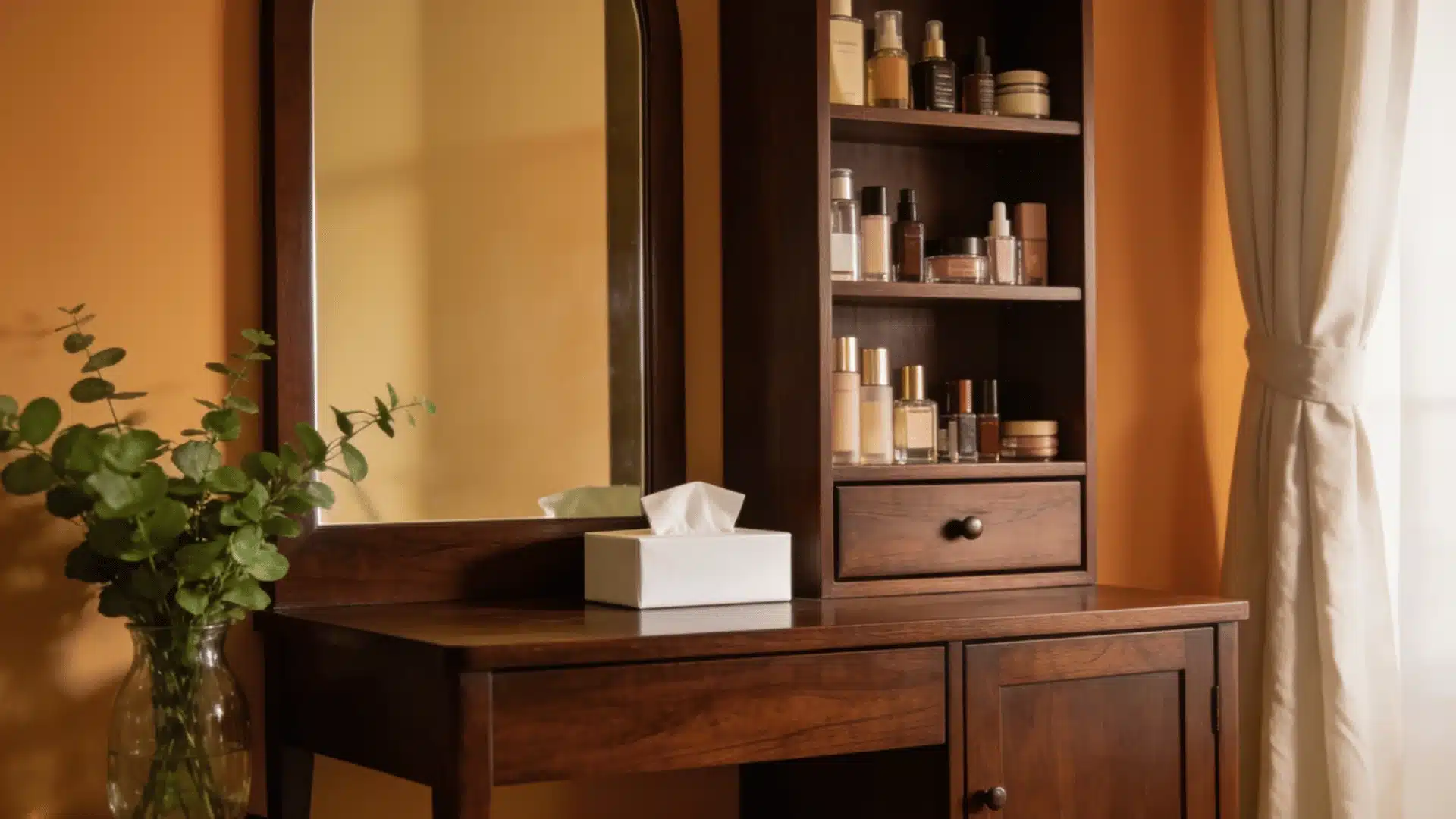
A dressing table is designed specifically for personal grooming and getting ready. It typically comes with a mirror, small drawers, and a flat surface for keeping cosmetics, jewelry, and daily essentials organized.
These tables are most common in bedrooms, though smaller versions work in a dedicated dressing area or walk-in closet.
The surface height usually sits between 28 and 32 inches, which is comfortable for seated use with a matching stool or bench.
Wood and MDF are the most common materials, with painted finishes being popular for lighter bedroom setups.
A Quick Checklist Before Purchasing Your Tables – What to Consider
Buying a table without a plan often leads to a piece that looks right in the store but does not work at home.
Running through a few basic checks before purchasing saves time and avoids a costly return.
Room Size and Available Space
Measure the room before anything else. Leave enough clearance around the table for comfortable movement.
For dining tables, 36 inches of space on each side is a practical minimum.
Table Height
Standard dining tables sit at around 30 inches. Counter-height tables run between 34 and 36 inches. Bar-height tables go up to 42 inches.
The height needs to match how the table will be used and what seating it will be paired with.
Material and Durability
Think about where the table will be placed and how much daily use it will get.
High-traffic surfaces benefit from durable finishes. Outdoor tables need weather-resistant materials.
Marble and glass require more careful maintenance than wood or laminate.
Storage Needs
Decide upfront whether the table needs to serve a storage purpose.
Coffee tables, nightstands, and dressing tables often come with drawer or shelf options that add function without requiring extra furniture.
Style and Existing Decor
The table does not need to match every piece in the room, but it should not clash either.
Consider the existing furniture tones, materials, and overall room style before committing to a finish or design.
Budget and Long-Term Value
A lower price point can work well for accent and side tables.
For high-use pieces like dining tables and desks, spending a little more on a durable material tends to pay off over time.
Conclusion
Every table in a home serves a purpose.
A dining table carries daily routines. A coffee table anchors a living room. A console table keeps an entryway functional.
Knowing the different types of tables and what each one is built for makes it easier to buy something that actually works for the space.
Material, size, and placement all factor in, and getting those details right from the start saves a lot of second-guessing later.
Frequently Asked Questions (FAQ’s)
1. What Table Shape is Best for Small Dining Spaces?
Round tables work best in small dining spaces. They take up less visual weight and allow easier movement around them.
2. How Do I Choose the Right Material for an Outdoor Table?
Choose teak, aluminum, or resin for outdoor tables. These materials handle weather exposure well and need minimal upkeep.
3. Can a Coffee Table Double as a Storage Solution Effectively?
Yes. Many coffee tables come with drawers, lower shelves, or lift-top designs that add practical storage without extra furniture.