The fireplace is usually the last thing people update, and often the first thing visitors notice.
A plaster fireplace adds beauty to a room without feeling overdone. The finish is smooth, the look is clean, and the options are far more varied than most people realise.
From classic period styles to stripped-back modern designs, there’s a lot to work with.
Read on to see what suits a home best, and what it actually costs.
What is a Plaster Finished Fireplace?
A plaster-finished fireplace uses plaster as the main material for the surround and mantel.
The plaster gets applied over a base structure, creating a smooth or textured finish that can be painted or left natural. This technique dates back centuries.
European homes often featured plastered fireplaces with ornate details and moldings.
Plaster works as a veneer over brick, drywall, or wood. It’s moldable when wet, so it can form curves, arches, and custom shapes that other materials can’t achieve.
Once dry, it hardens into a durable surface that handles heat well.
Before starting, it’s also important to understand basic fireplace safety guidelines to avoid heat damage or structural issues.
Why Choose a Plaster Fireplace for Your Home?
Compared to stone, tile, or brick, plaster is cheaper, faster to install, and easier to repair.
Here’s what makes it worth considering:
Versatility in Design: Plaster can be shaped into any form.
Curved arches, flush wall designs, built-in niches — plaster handles them all. Stone and tile can’t do that without significant cost.
Cost-Effective Option: Plaster typically costs less than stone or custom tile work. Installation is faster, too, which means lower overall labor expenses.
Easy Maintenance: Small cracks or chips can be easily patched and blended. No need to replace entire sections like with tile or stone. Simple touch-ups keep the fireplace looking fresh.
Timeless Aesthetic: Plaster creates a clean, smooth appearance that adds warmth without overwhelming a space.
Types of Plaster for Fireplaces
The plaster type you choose determines the final look, how long it lasts, and how much it costs. There are three main options:
Lime Plaster
Lime plaster is a traditional choice that’s been used for centuries. It develops a subtle patina over time, giving it an aged, authentic look.
- Breathable and natural
- Works well in both traditional and modern settings
Venetian Plaster
Venetian plaster is made from lime putty and marble dust, then burnished to a smooth sheen. The multiple thin layers create depth and visual interest.
- Polished, stone-like finish
- Ideal for luxury and high-end spaces
- Reflects light beautifully
Gypsum Plaster
Gypsum plaster is easy to apply and dries quickly. It takes paint well and can be finished in various ways.
- Best for decorative surrounds rather than high heat zones
- Works well when the fireplace is more decorative than functional
NOTE: If budget isn’t a constraint, Venetian plaster is the one to choose for a fireplace that holds its value over time. The layered finish genuinely looks different from the other options – more depth, more character, more durability.
Popular Modern Plaster Fireplace Design Ideas
Modern fireplaces with a plaster finish come in various styles that suit different spaces and preferences.
Here are some designs that showcase what plaster can do.
1. Flush Wall Fireplace
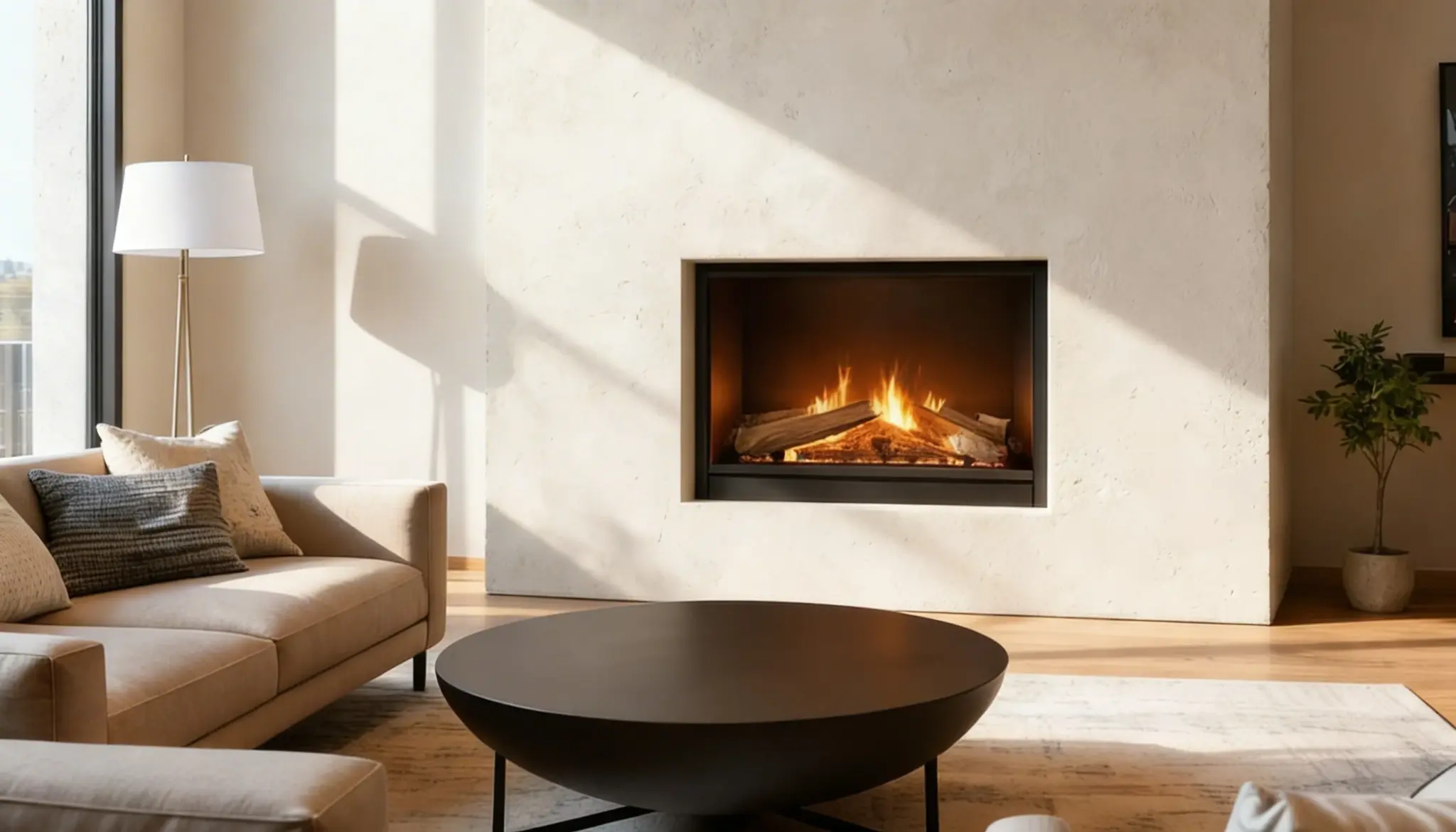
A flush wall fireplace sits completely flat against the wall. There are no ledges, no frames, and no protruding elements.
The plaster blends right into the surrounding surface, giving the room a clean, minimal feel.
It is one of the smartest choices for smaller rooms with tight spaces. Simple, understated, and surprisingly effective.
2. Floor-To-Ceiling Plaster-Coated Fireplace
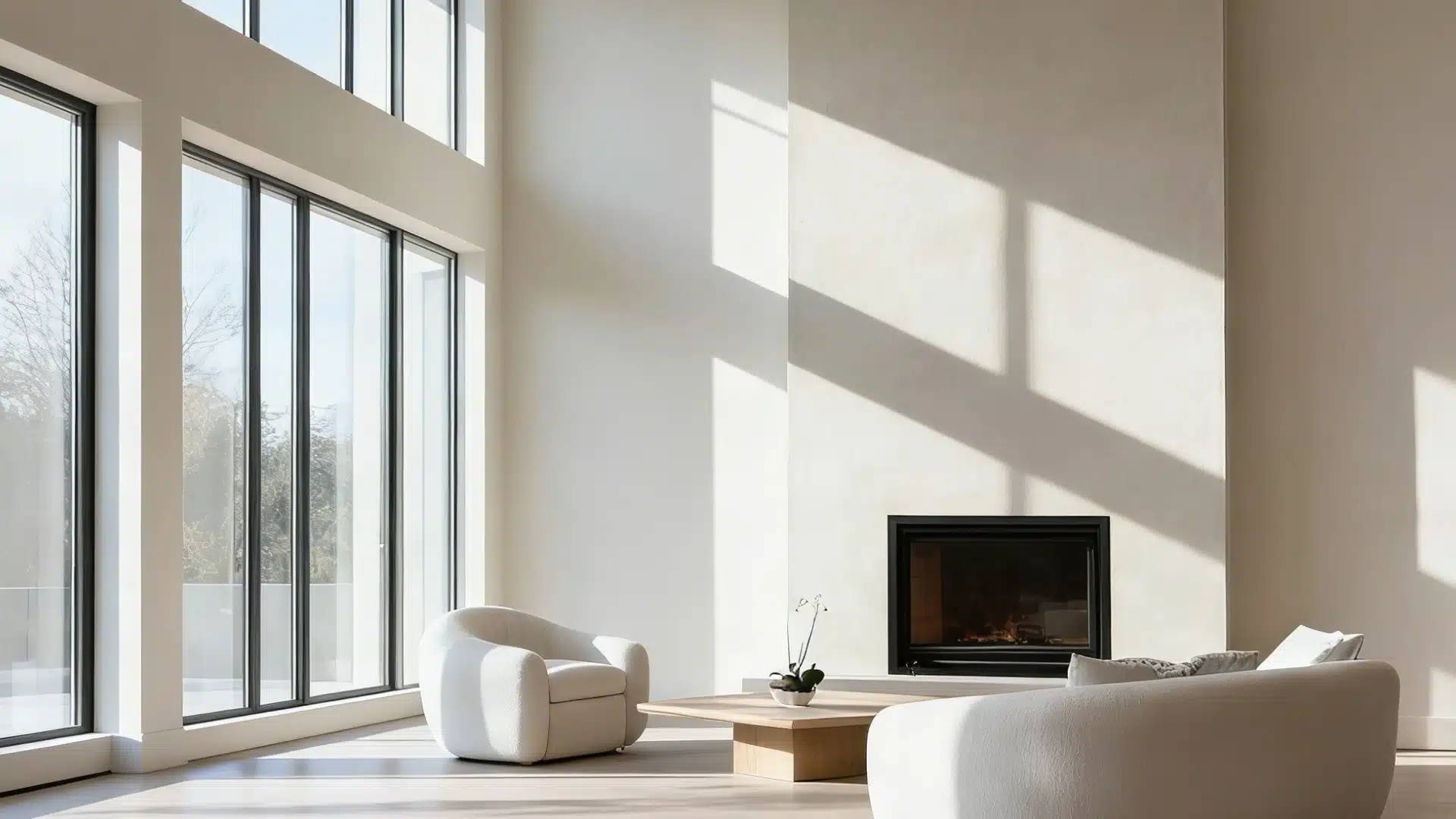
Few things make a room feel taller than a floor-to-ceiling fireplace. The continuous plaster surface runs straight up, drawing the eye upward naturally.
It becomes the focal point of the room. A fireplace like this works especially well in spaces with high ceilings or open floor plans. Bold but not overdone.
3. Floating Hearth Fireplace
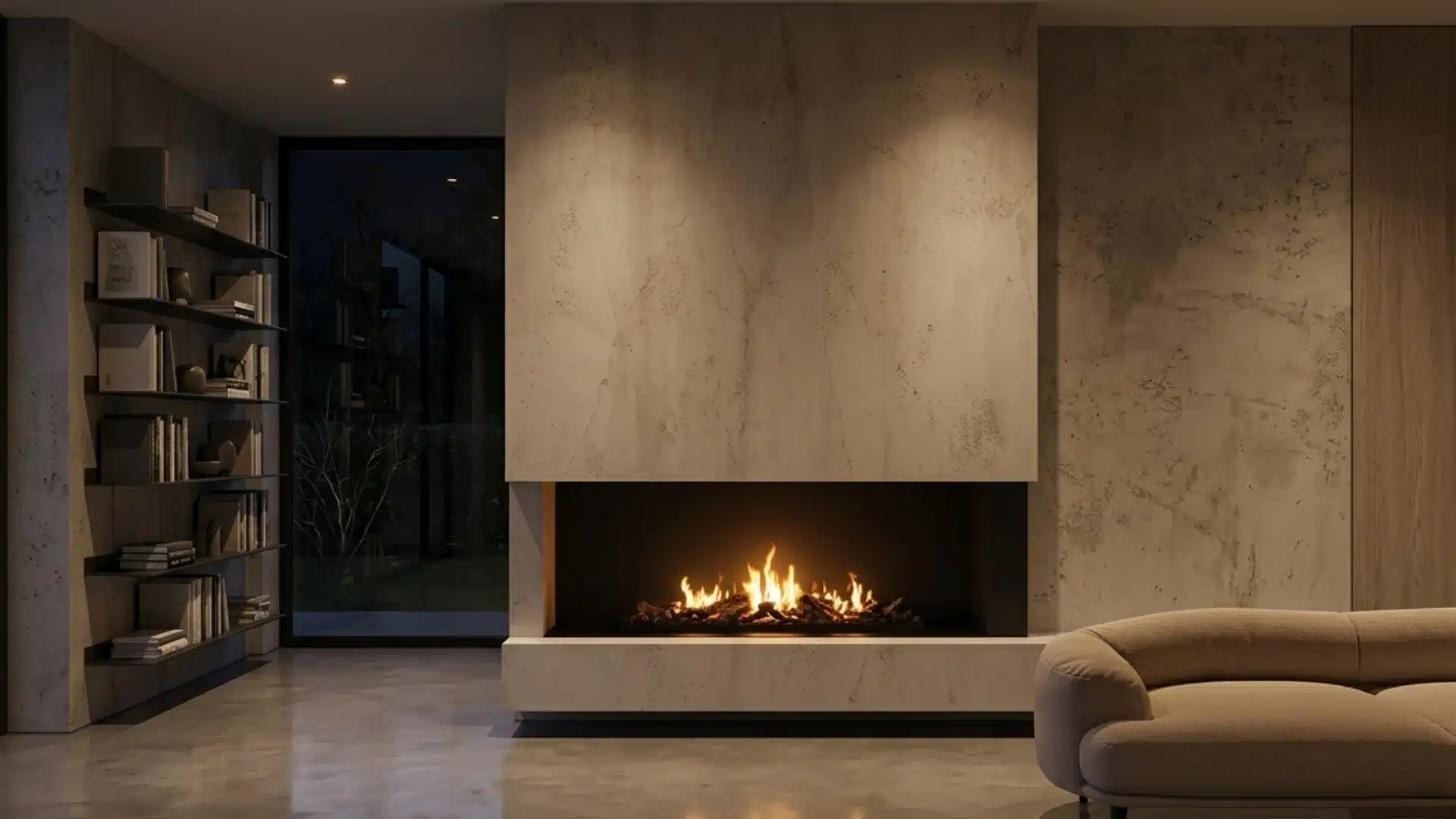
The hearth appears to hover just above the floor with a visible gap underneath.
That small space adds a sense of lightness to the whole design. It also makes sweeping and cleaning far easier.
A floating hearth suits contemporary rooms well, particularly those with polished concrete or large-format tiles. Modern, practical, and quietly striking.
4. Corner Plaster-Finished Fireplace
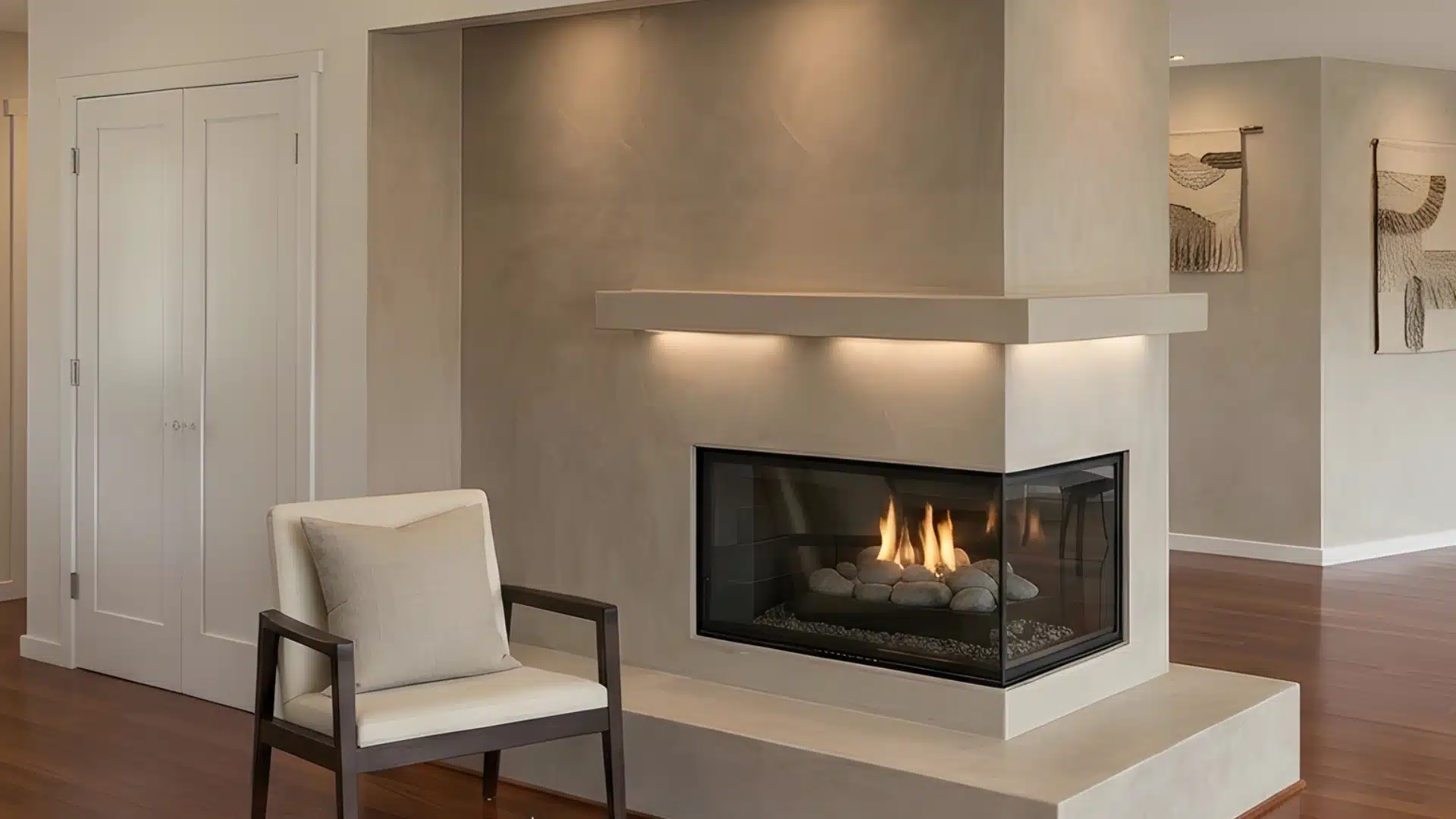
Corner spaces are often wasted. A corner fireplace puts that area to good use while spreading warmth across two walls.
The plaster wraps smoothly around the bend with no visible seams or awkward joints.
A plaster fireplace in a corner placement works especially well in smaller rooms or open-plan layouts. A practical solution that looks considered.
5. Fireplace with Hidden Storage
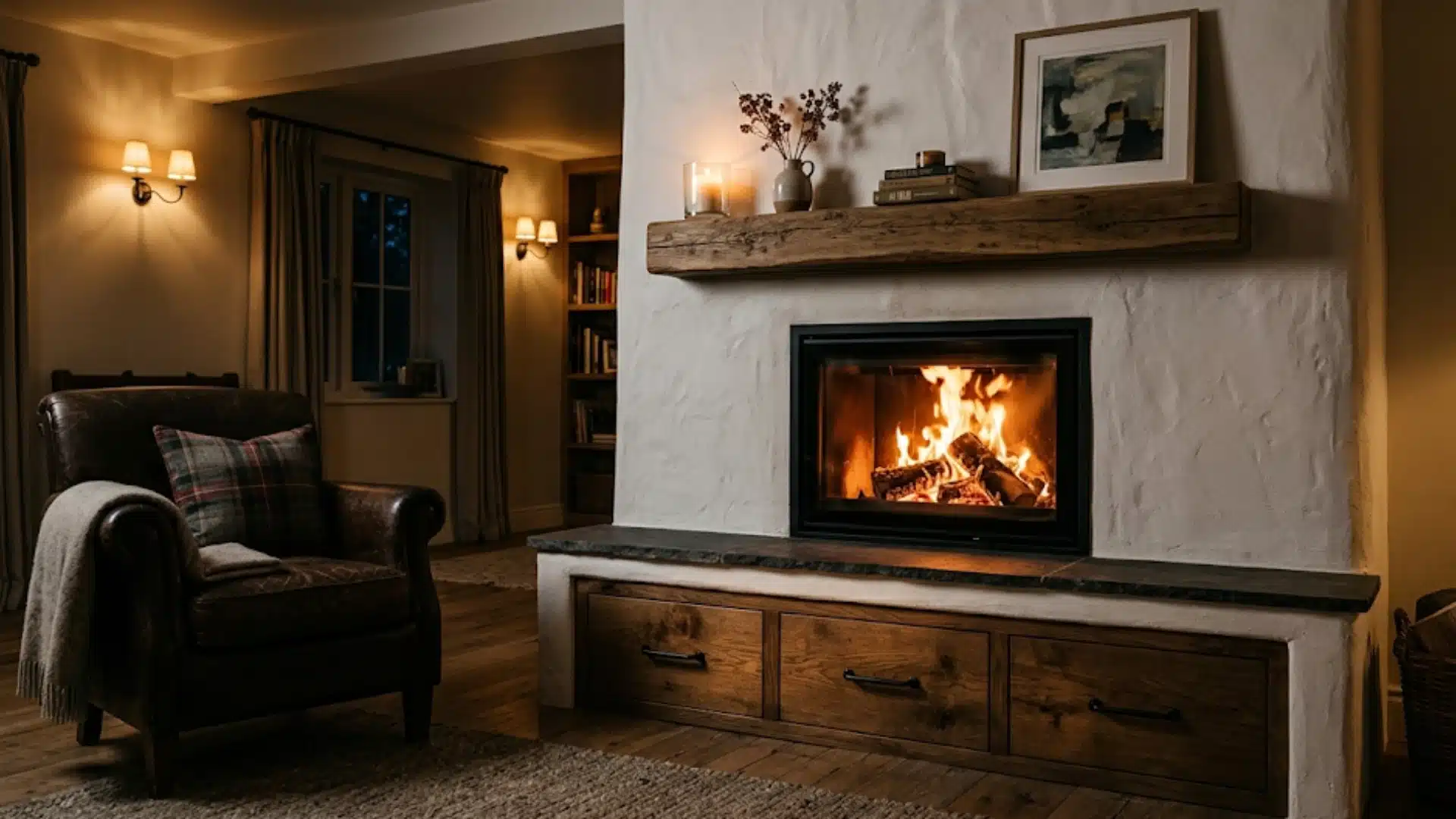
Storage and style do not have to compete. Built-in compartments sit beside or below the fireplace opening and are covered with the same plaster as the surrounding wall.
Cabinet doors disappear into the surface. It keeps firewood, remotes, and everyday items close without cluttering the space. A fireplace with hidden storage proves that function can look very good.
6. Plaster-Coated Fireplace with Black Firebox
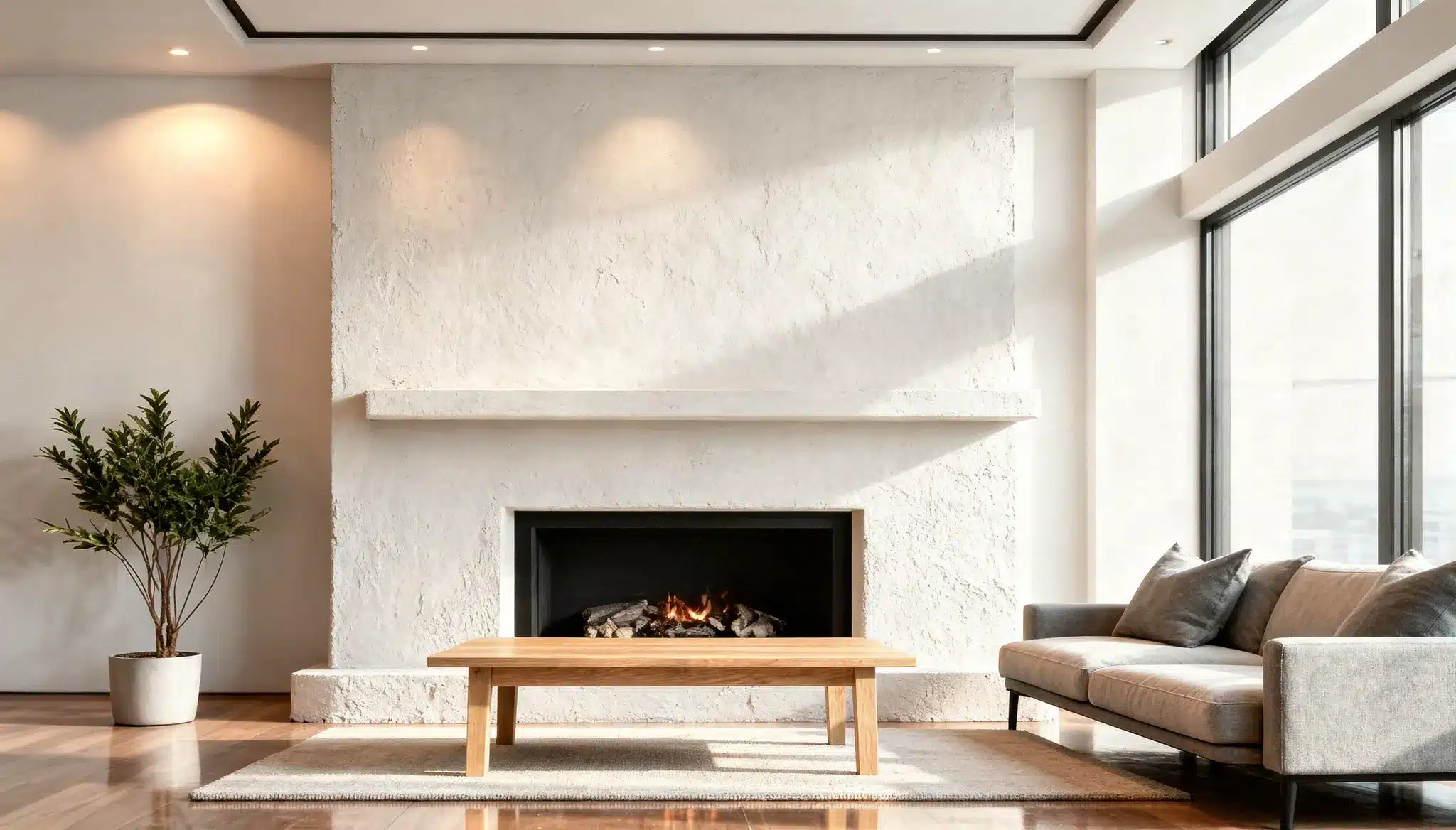
Light plaster and a black firebox create a sharp contrast. The dark opening makes the fire stand out more clearly and adds a dramatic edge to the overall design.
A plaster fireplace paired with a black insert works in both modern and traditional rooms. The combination is bold enough to feel intentional but balanced enough to stay timeless.
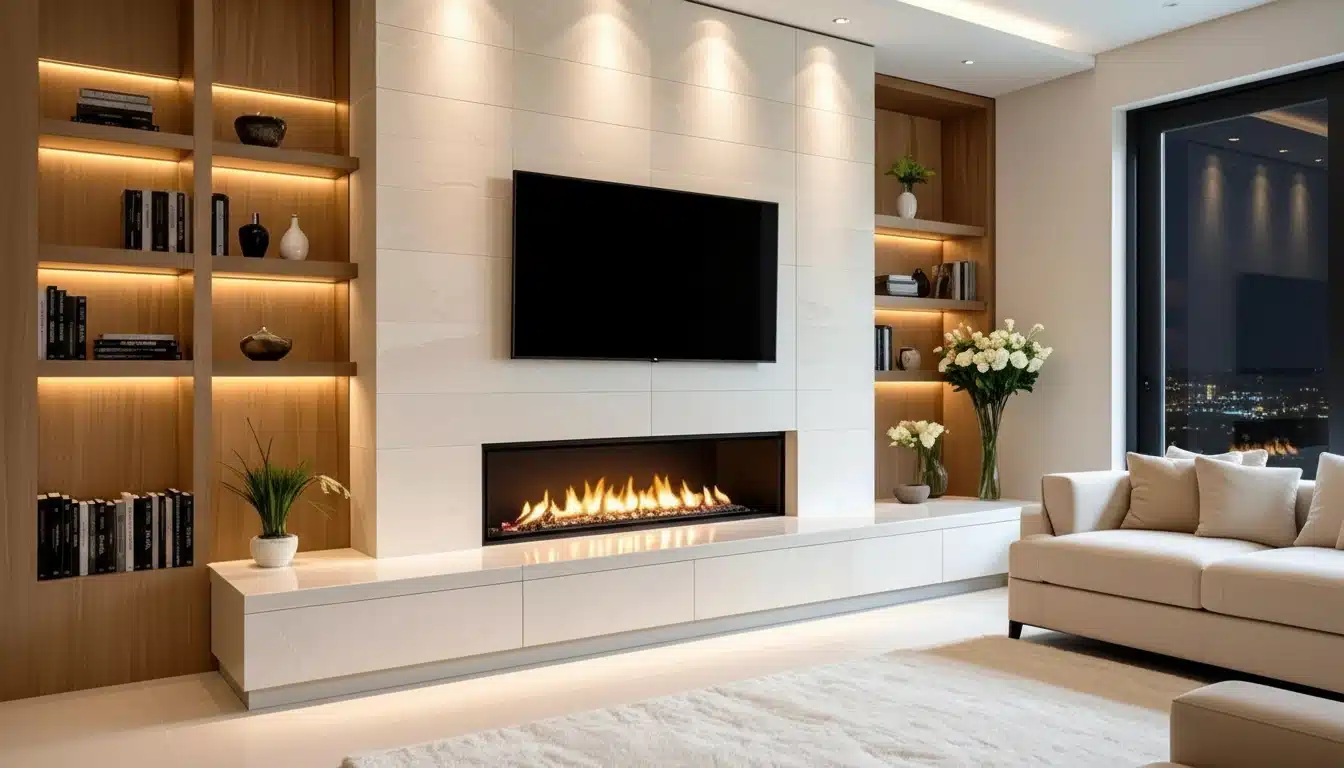
7. Modern Plaster-Coated Fireplace with No Mantel
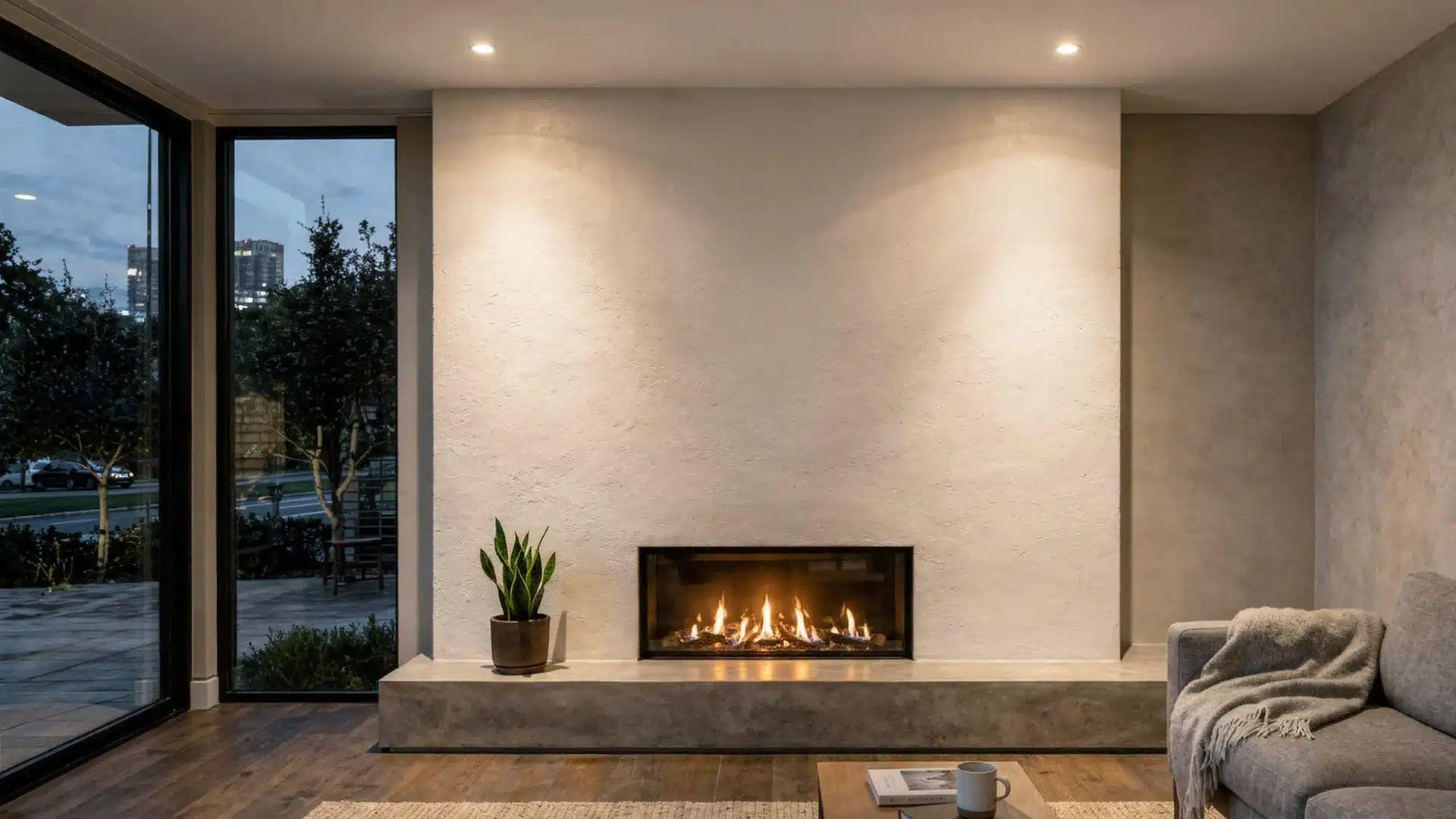
Taking away the mantle opens up the wall. The result is a flat, clean surface that lets the fire speak for itself.
Without a shelf competing for attention, the design feels more current and less formal.
This approach works particularly well when a wall-mounted TV or a single piece of art sits directly above. Less truly is more here.
Recessed niches on either side of the fireplace add depth and purpose to the wall.
Plaster Coated Fireplace Cost Breakdown
Costs vary more than most people expect. Plaster type, project size, and local labor rates all move the number significantly.
| Cost Factor | Price Range | Details |
|---|---|---|
| Lime Plaster | $8–$15 per sq ft | Natural and breathable. Higher cost due to traditional application methods. |
| Venetian Plaster | $15–$30 per sq ft | Most expensive option. Requires multiple layers and skilled craftsmanship. |
| Gypsum Plaster | $5–$10 per sq ft | Most affordable choice. Quick application and best for decorative surrounds. |
| Labor Costs | $50–$100 per hour | Experienced plasterers charge more. Complex designs increase labor time. |
| Surface Preparation | $200–$500 | Includes cleaning, repairs, and priming before plaster application. |
| Custom Features | $300–$1,000+ | Arches, niches, or built-in storage add to the total cost. |
A standard Plaster Finished Fireplace surround typically costs between $1,500 and $5,000. High-end projects using Venetian plaster with custom features can exceed $8,000.
How to Apply Venetian Plaster to a Fireplace?
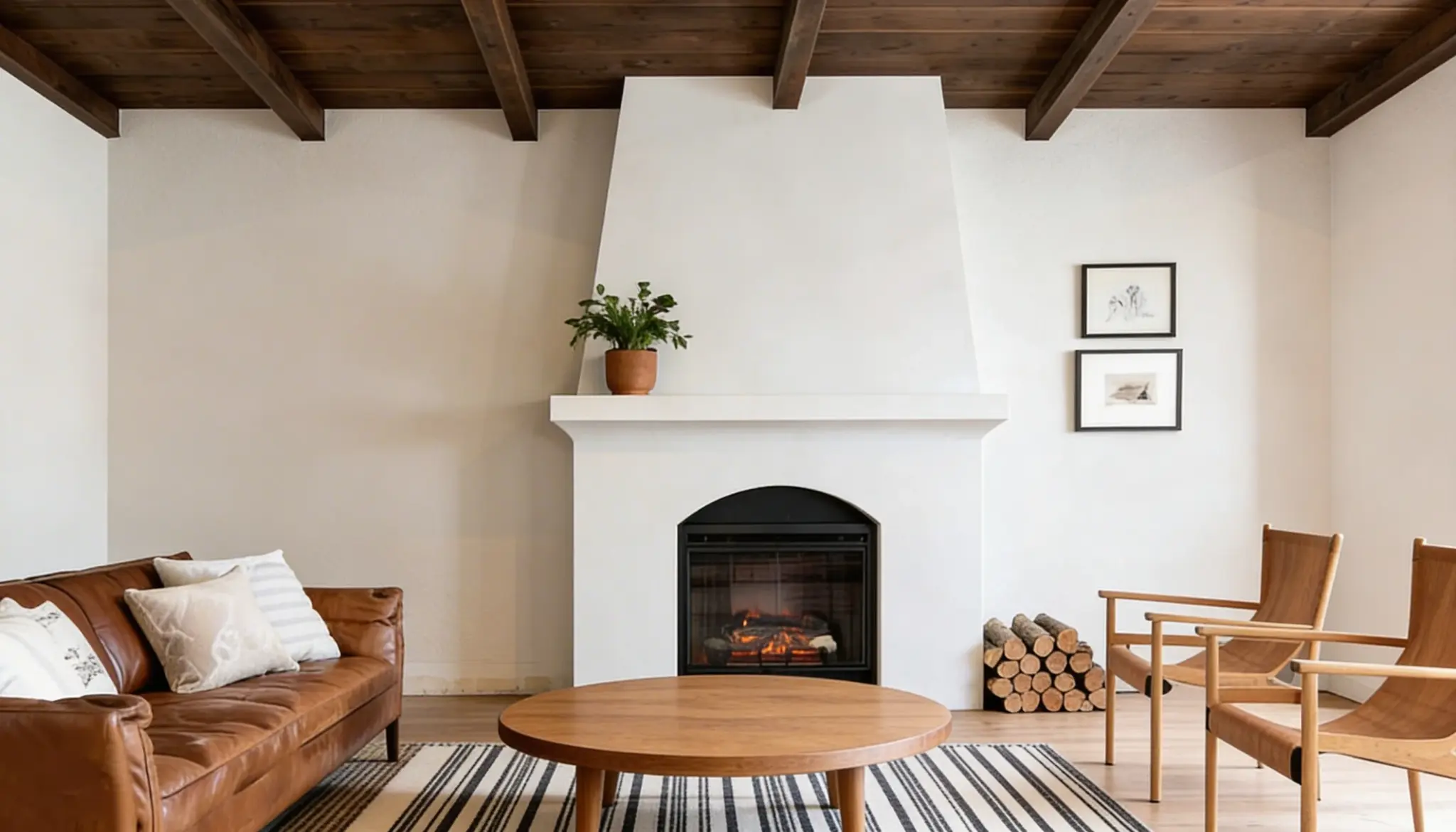
Getting a Venetian plaster fireplace right comes down to preparation and patience. Rushing any step shows in the final result.
Here is how it is done properly:
Step 1: Prepare the Surface
Start with a clean, stable base. Remove dust, grease, and any loose material from the fireplace surface.
Repair cracks and sand lightly where needed. A primer coat suitable for plaster goes on last. Skipping this step is one of the most common mistakes.
This step determines how well everything above it holds.
Step 2: Apply the Base Coat
Use a steel trowel to spread the first thin layer evenly across the surface. Keep strokes smooth and consistent. This coat builds the foundation for everything that follows.
Perfection is not the goal here; coverage is. Let it dry out completely before moving forward.
Step 3: Add the Second Layer
This is where texture and depth start to take shape. A fireplace gets its character from these layered, overlapping marks.
Keep the coat thin and controlled. Do not go back over areas that have already started drying it pulls the plaster and creates uneven patches. Allow it to dry fully before continuing.
Step 4: Build Depth with Additional Layers
One or two more thin coats go on, depending on the finish required. Slight changes in pressure and stroke direction create that signature layered look.
Each coat must dry completely before the next one starts. Patience at this stage makes a visible difference in the final result.
Step 5: Burnish the Surface
Once the final coat is partially dry, use a clean steel trowel to polish the surface in firm, circular motions.
This compresses the plaster, bringing out a soft, natural sheen. The more time spent burnishing, the smoother and more polished the finish becomes.
A well-burnished surface genuinely looks like polished stone.
Step 6: Seal and Protect
Finish with a protective sealer or wax, particularly important for fireplaces exposed to heat.
This improves durability and makes the surface far easier to maintain.
Buff lightly when using wax for a subtle, low-sheen finish that holds up over time. Reapply the sealant once a year to keep the surface in good condition.
Styling Tips For Plaster-Finished Fireplaces
A plaster surround frames the fireplace opening and covers the wall area around the firebox.
- Keep decor simple: Let the plaster remain the focal point without competing accessories.
- Use one or two clean accessories: A single piece of art or a minimal vase works best. Avoid cluttering the space with multiple items.
- Choose complementary colors: Select decor that enhances the plaster’s tone rather than clashing with it. Neutral accessories work well with most plaster finishes.
- Consider scale and proportion: Large rooms can handle bigger statement pieces, while small spaces need smaller, lighter accessories.
- Let the fireplace be the main feature: The plaster’s texture, color, and finish should draw attention naturally. Well-executed plaster doesn’t need much decoration to make an impact.
Conclusion
A plaster fireplace can genuinely change how a room feels, not just how it looks.
From flush wall designs to arched openings, the options suit nearly every home and budget. The finish is durable, the style choices are wide, and the results speak for themselves.
Pick a design that fits the space, work with a skilled plasterer, and the fireplace becomes the best feature in the room.
Frequently Asked Questions
1. How to Maintain a Plaster Fireplace?
Dust regularly, seal the surface periodically, and repair small cracks early to prevent them from spreading further.
2. What are the Benefits of a Plaster Fireplace?
Plaster offers a smooth finish, custom textures, long-lasting appeal, and fits both modern and traditional interiors well.
3. What are the Safety Considerations for a Plaster Fireplace?
Use heat-resistant plaster near the firebox, ensure proper ventilation, and have the fireplace inspected by a professional regularly.