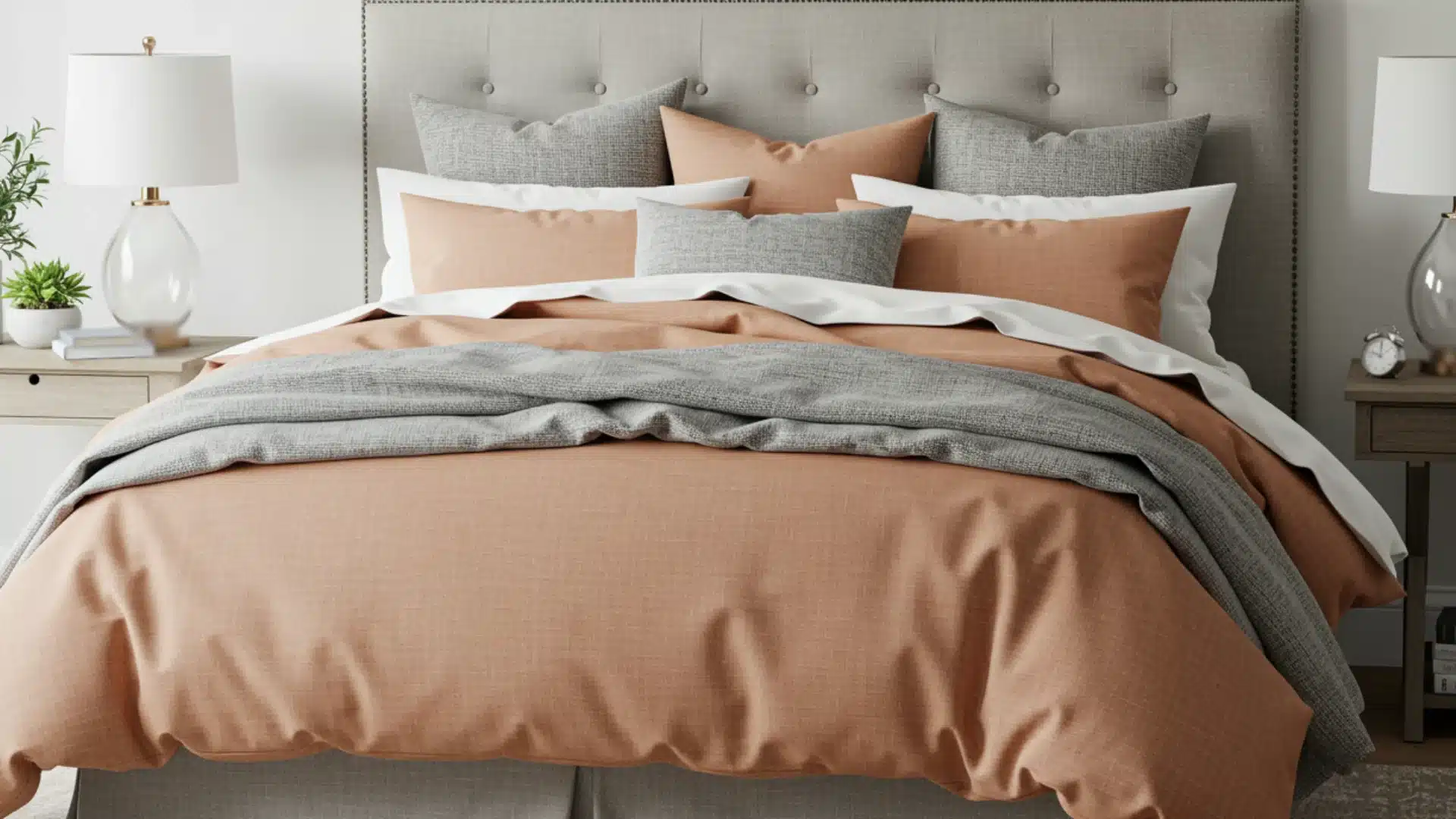
Most beds look flat and uninspiring, not because the bedding is cheap, but because the middle layers are missing.
Learning how to layer bedding doesn’t mean buying anything new.
You just need a simple trick that works with what you already have.
This blog gives you a clear, step-by-step way to layer your bedding so your bed looks and feels better.
The Golden Rule of Layering
Every layer should be visible. If you can’t see it, it isn’t doing anything for the look of the bed.
Work light to heavy, bottom to top. Each layer should peek out just enough to show it’s there, a few inches is all it takes. Texture matters more than colour.
Mix smooth cotton with a waffle weave or chunky knit, and the bed does the rest.
The 5 Layers in Order: How to Layer Bedding
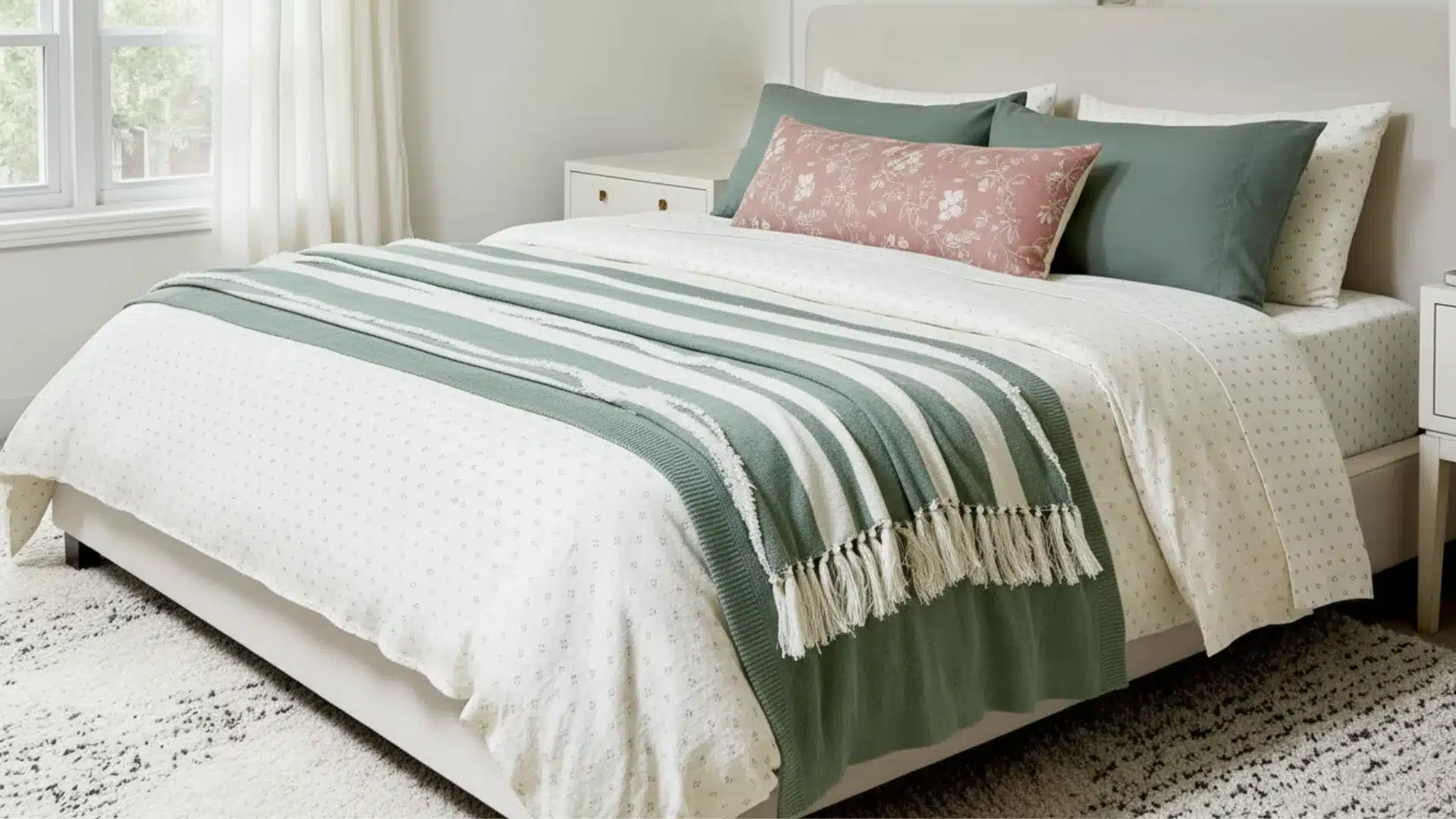
Here is the exact bedding layers order to follow, no guesswork, no extra shopping.
1. Fitted Sheet: The Foundation
This is the base everything else sits on. Go for linen or cotton in a neutral tone so it works with any colour above it.
It’s invisible once the bed is made, but it matters.
One small tip: a slightly oversized fitted sheet stays put far better than one that’s too tight.
2. Flat Sheet: Optional (but worth it)
Place it pattern-side down over the fitted sheet.
When you fold it back over the duvet, the decorative edge faces up; that’s the hotel look right there. Many people skip this layer, but it’s what gives a bed that clean, finished feel.
3. The Middle Layer
A lightweight quilt or coverlet goes here, between the flat sheet and the duvet.
This is the layer that separates a flat bed from one with real depth. It adds visual substance and heat without making things too heavy, perfect for bedrooms that feel as good as they look.
If you don’t have a coverlet, a folded blanket works just as well here. Fold it in thirds lengthwise and lay it across the lower two-thirds of the bed. Looks kind of perfect.
4. Duvet or Comforter: The Main Heat Layer
Lay it over everything and fold it down one-third from the top.
That fold reveals the layers underneath, which is the whole point. A linen duvet cover works especially well for a warm, relaxed bedroom feel.
For extra fluff, put an oversized insert inside a standard-sized cover.
5. Throw at the Foot: The Finishing Touch
Drape a chunky knit or textured throw loosely at the corner of the bed.
Don’t fold it into a neat rectangle that looks stiff. A casual drape feels more natural and ties the layered bedding ideas together without trying too hard.
The easiest way to get the drape right: hold the throw from the centre and let it fall naturally over the corner of the bed – roughly one-third on the bed, two-thirds hanging off.
That asymmetry is what makes it look relaxed rather than placed.
Layering Pillows – Keep it Simple Always
Pillows finish the bed. But too many and it looks cluttered, too few, and it looks bare.
Start at the back with your sleeping pillows.
Place shams in front of those, then one or two decorative pillows at the very front. That’s the order back to front, functional to decorative. Odd numbers work better than even. Three or five pillows feel natural and balanced.
Four often looks too symmetrical and a little stiff. One lumbar pillow at the front pulls everything together.
It adds shape and a finishing point without tipping into excess.
Texture and Color Rules
Knowing how to style a bed comes to, you don’t need a matching bedding set.
You need a colour family. Pick two or three tones that sit close together, think oat, cream, rust, or soft brown.
They don’t have to be identical. They just have to belong together on the same bed without fighting for attention.
When it comes to texture, contrast is everything:
- Linen against velvet.
- Smooth cotton next to a chunky knit.
- A waffle weave under a soft, matte duvet cover.
Not more colours, more contrast between surfaces. One pattern is enough. Put it on the throw or a single cushion and leave everything else plain.
The moment you add a second pattern, the layers stop working together and start competing.
How to Make a Bed Look Luxurious Without Buying New Bedding
Luxury isn’t about what you spend. It’s about how you layer.
| What to Do | Why it Works |
|---|---|
| Add a spare blanket as a middle layer | Builds depth between the sheet and the duvet |
| Fold the duvet one-third down | Shows the layers beneath |
| Drape a throw loosely at the foot | Adds texture without looking stiff |
| Use an oversized insert in a standard cover | Creates a full, plump duvet |
| Steam your flat sheet and pillowcases | Crisp fabric looks expensive |
| Stick to a neutral colour palette | Tonal tones always look deliberate |
| Use odd numbers for pillows | Feels balanced, not overdone |
Layering also solves the seasonal problem most people handle by buying separate bedding sets.
In warmer months, remove the middle layer and swap the chunky knit throw for something lighter. A cotton waffle or linen throw does the same visual job without the heat.
The base layers stay the same year-round; only the top two need to change.
Common Layering Mistakes that Ruin the Look
Avoid these, and your bed will look better immediately:
- Using one fabric throughout makes the whole bed look flat.
- A neatly folded throw looks staged. Drape it, don’t fold it.
- Buying everything from one matching set kills contrast and depth.
- Too many pillows end up on the floor every single night.
- Skip the middle layer, and the bed will always look thin.
Final Thoughts
A great-looking bed comes down to one thing: layers.
Once you understand how to layer a bed correctly, everything else falls into place.
Start with a fitted sheet, add a flat sheet, drop in a middle layer, top it with a duvet, and finish with a throw.
That’s the whole formula for how to layer bedding the right way. You don’t need new bedding. You need the right order, a little texture contrast, and the confidence to leave the throw slightly undone.
Try it tonight. Adjust what feels off.
Your bed doesn’t need a full overhaul; it just needs the layers it’s been missing.
Frequently Asked Questions (FAQ’s)
1. Why are People no Longer Using Top Sheets?
Most people find them unnecessary, as duvets and covers are easier to wash.
2. Why Shouldn’t You Make Your Bed First Thing in the Morning?
An unmade bed lets moisture escape, reducing dust mites and bacteria buildup.
3. What is the 2 2 1 Pillow Rule?
Two sleeping pillows, two shams, and one decorative pillow up front.
4. How Many Pillows Should Be on a Queen Bed?
A queen bed works best with four to six pillows total.