Spain has many UNESCO World Heritage Sites.
That number alone tells you something is different here. Every major city has its own distinct look, its own history pressed into stone, tile, and mortar.
Picking just one as the best for architecture is not straightforward.
The right answer depends entirely on what kind of buildings stop you in your tracks.
The cities covered here each make a strong case for themselves, and by the end, the right one for you should be pretty clear.
Modern Architecture in Spain: Built by Many, Owned by None
Spain did not develop one architectural identity.
It developed several:
- Roman left behind bridges and aqueducts that still stand today
- Moorish rulers brought geometric tilework, courtyard gardens, and horseshoe arches across the south
- Christian kings raised Gothic cathedrals across the country
- Gaudí and Calatrava pushed Spanish buildings into a completely new territory in the 20th century
- The south was shaped by nearly eight centuries of Islamic rule
- Catalonia industrialized early and produced its own modernist movement
- Madrid grew around royal authority and neoclassical design
That regional split is exactly what makes Spanish architecture so varied and worth paying attention to.
Most Famous Cities Known for Architecture in Spain
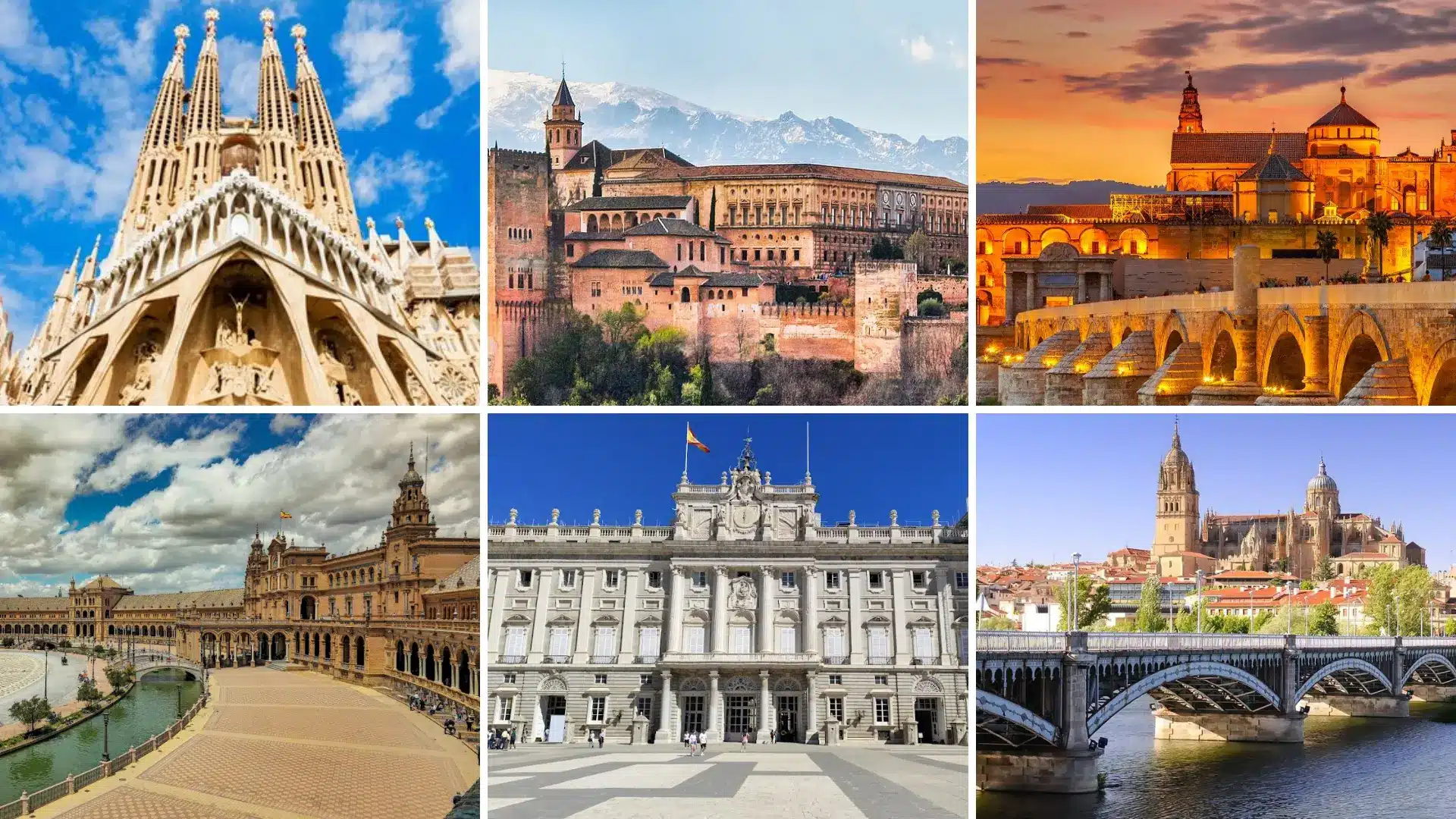
No single city holds all the answers.
Each one specializes in something different, and the best choice depends entirely on what kind of buildings stop you cold.
1. Barcelona: A City Shaped by Creative Vision
Barcelona is the first name most people reach for, and it earns that.
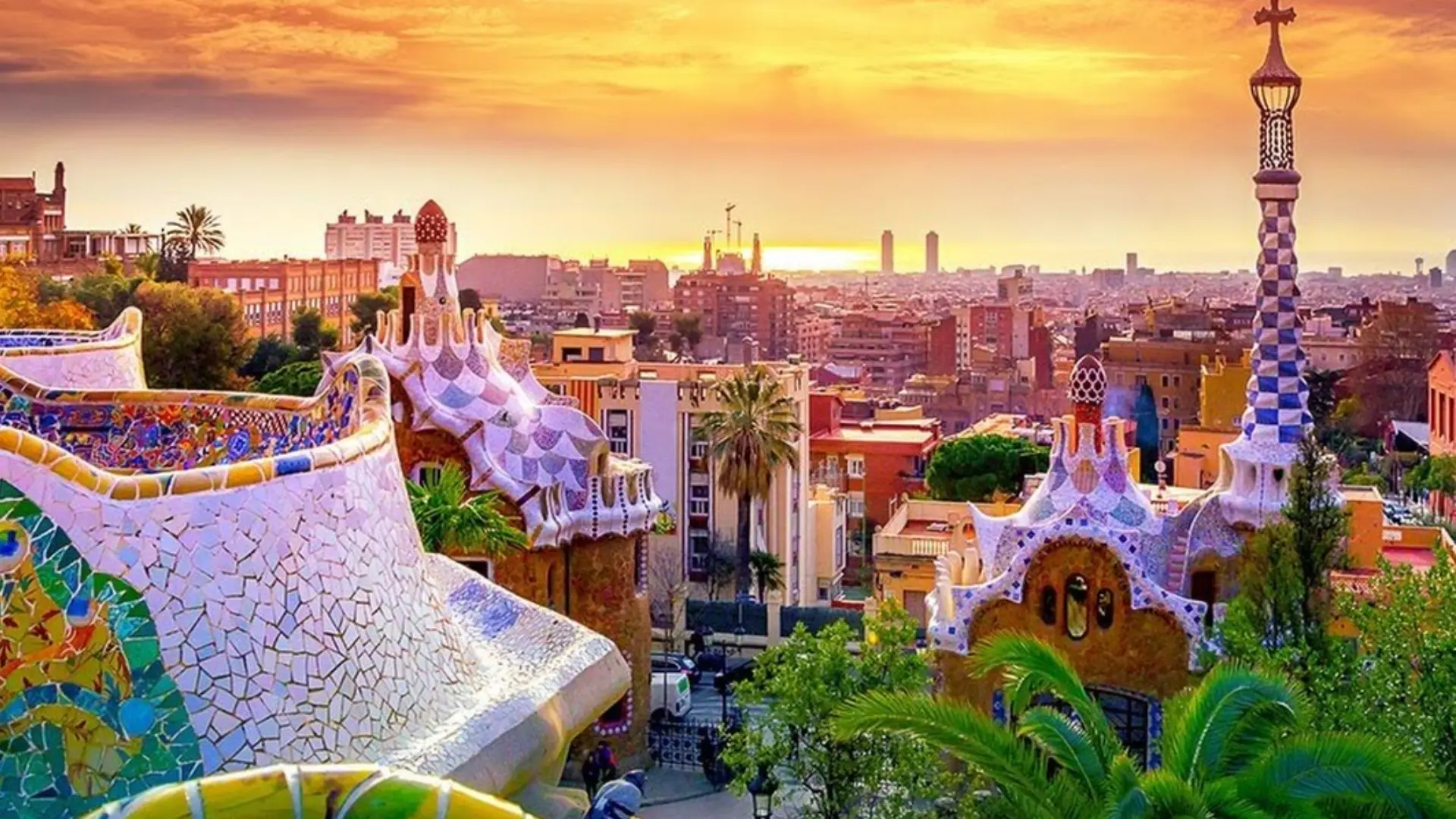
From the medieval Gothic Quarter to Gaudí’s Sagrada Familia and Park Güell, no other Spanish city covers as much architectural ground in one place.
Gaudí’s buildings look grown rather than built, full of curves and organic forms that still feel ahead of their time.
Pro tip: Book Sagrada Familia tickets at least two weeks ahead. It sells out fast.
2. Granada: The Heart of Andalusian Architecture
Granada is where Islamic design reached its peak on the Iberian Peninsula.
The Alhambra sits above the city as a palace, fortress, and garden complex combined.
Carved plaster walls, geometric tile floors, and courtyard fountains define its interiors in a way photographs cannot capture.
3. Córdoba: A Blend of Cultures in Stone
Córdoba does not get the same attention as Barcelona or Granada, but architecturally, it holds its own.
The Great Mosque of Córdoba, built in 784, features double tiered horseshoe arches in alternating red and white stone. After the Reconquest, a cathedral was built directly inside the mosque.
The two sit side by side today, neither erasing the other.
4. Seville: Where Styles Meet and Evolve
Seville layers Moorish, Mudejar, and Gothic design across the same streets.
The Alcázar showcases intricate tilework and lush gardens. The Gothic cathedral, the third largest in the world, houses the tomb of Christopher Columbus.
The Plaza de España, built for the 1929 Exposition, adds Spanish revival architecture at its most dramatic.
5. Madrid: Classic Meets Modern
Madrid built its identity around royal power and neoclassical design.
The Royal Palace is the largest in Western Europe with 3,418 rooms.
Its modern skyline now sits in sharp contrast to that classical core, making it one of the few capitals where old and new genuinely compete for attention.
6. Valencia: Innovation on Display
The City of Arts and Sciences, designed by Santiago Calatrava, spans 350,000 square meters and includes a science museum, a cinema, an aquarium, and a planetarium.
Valencia shows what happens when a city commits fully to building toward the future.
7. Salamanca: Golden Stone Beauty
Salamanca earns its place through visual consistency alone.
The University of Salamanca showcases the Plateresque style with its detailed stone facades.
The entire old city glows in warm sandstone, especially at sunset, making it one of the most photogenic urban centers in Spain.
Famous Buildings in Spain That Define These Cities
Every city covered above has one structure that says everything about it.
| Building | City | Why It Matters |
|---|---|---|
| Sagrada Familia | Barcelona | Gaudí’s unfinished basilica, under construction since 1882 |
| Alhambra | Granada | The finest surviving example of Moorish palace architecture |
| Great Mosque of Córdoba | Córdoba | A mosque and a cathedral sharing the same walls |
| Alcázar of Seville | Seville | The oldest active royal palace in the world |
| City of Arts and Sciences | Valencia | Spain’s most ambitious modern architectural complex |
Final Thoughts
Spain does not have one architectural capital. It has several.
Barcelona leads in modernist creativity. Granada and Córdoba define Moorish design.
Seville layers styles with confidence. Madrid balances classical and modern. Valencia points toward what comes next.
Which city in Spain is best known for its architecture?
The honest answer is that each one deserves the title for different reasons.
Frequently Asked Questions
1. What is Spanish Architecture Called?
There is no single term as Spain produced Moorish, Gothic, Mudejar, Plateresque, Baroque, and Modernista styles across different regions.
2. Which City Has the Most Famous Buildings in Spain?
Barcelona and Granada consistently top the list with the Sagrada Familia and the Alhambra drawing the highest visitor numbers.
3. What Makes Spanish Revival Architecture Different?
It blends Moorish arches, terracotta roofing, decorative tilework, and courtyard layouts, most evident in early 20th-century buildings across Spain and Latin America.
4. Is Barcelona or Granada Better for Architecture?
Barcelona leads in modernist and Gothic design, while Granada is the stronger choice for Islamic and Moorish architecture.
5. What Influenced Modern Architecture in Spain?
The 1992 Barcelona Olympics and Seville World’s Fair accelerated a new generation of Spanish architectural talent, including Santiago Calatrava.