Standing in a hardware store, staring at door frames, wondering which dimension is correct.
Getting door frame sizes wrong can cost you time and money.
You might get gaps, drafts, or a frame that doesn’t fit. Knowing door frame sizes isn’t rocket science.
Once you know the standard measurements and how to measure your opening, you’ll shop confidently.
In this blog, you will learn everything you need to know about door frame dimensions. You’ll learn the standard sizes, how to measure accurately, and what to consider for different door types.
What is a Door Frame?
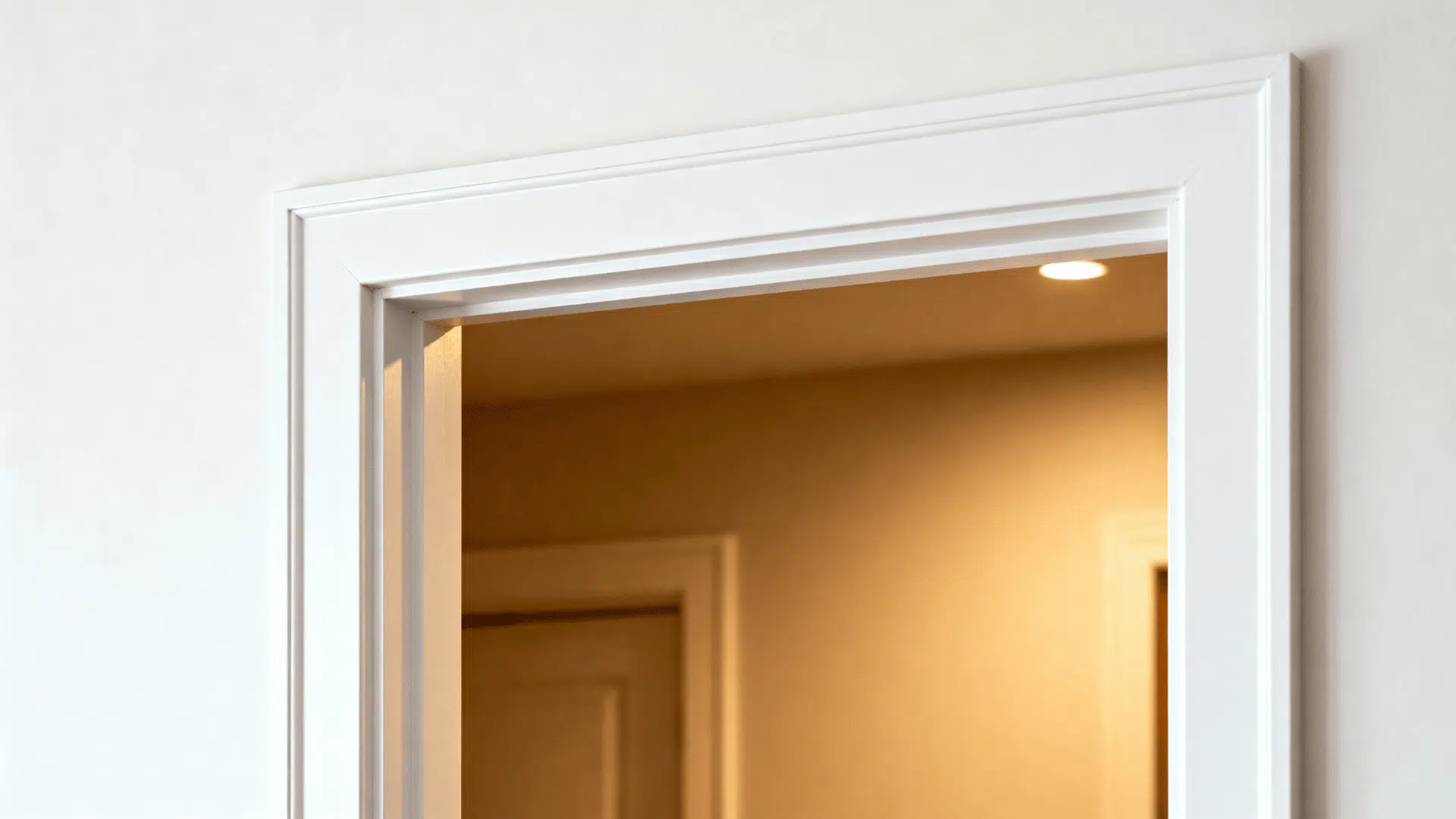
A door frame is the structure that surrounds and supports your door.
The structure that holds everything in place. It’s usually made from wood, metal, or composite materials.
The frame has three main parts. There’s the header at the top, which bears the weight. Then you’ve got two vertical pieces called jambs on each side. These create the opening where your door sits.
Without a proper frame, your door wouldn’t swing correctly. It would sag, stick, or leave gaps.
The frame also helps transfer weight from the door to your walls.
It provides a surface for hinges and the strike plate for your lock. Getting the dimensions correct matters a lot.
Standard Door Frame Dimensions
Most homes use standard door frame sizes. Knowing these measurements helps you shop smarter and avoid costly mistakes.
The width is measured across the frame from one side to the other.
Here’s what standard frames look like:
- Interior door frames: The rough opening is typically 38 inches wide for a 36-inch door.
- Exterior door frames: Standard rough opening is 38 inches wide for a 36-inch door.
- Jamb depth: Interior frames are 4-9/16 inches deep. Exterior frames go 5-1/4 to 6-9/16 inches deep.
- Frame height: Both interior and exterior frames have a rough opening height of 82 inches. This fits an 80-inch-tall door.
The actual door sits inside this frame with small gaps for movement
Door Frame Dimensions by Different Door Types
Different rooms and purposes call for different door sizes. The frame dimensions for various door types you’ll find in homes.
1. Single Entry Door
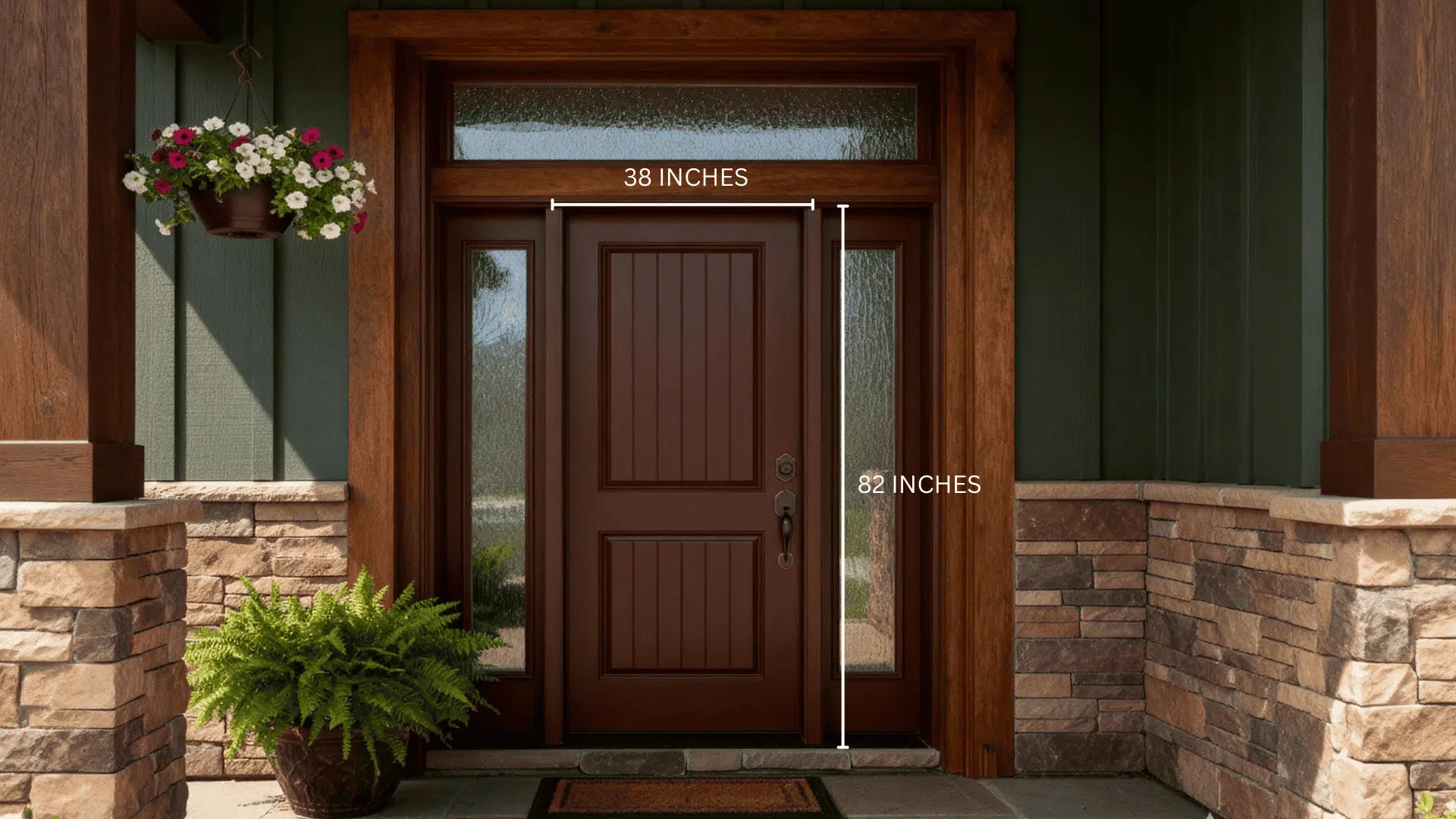
This is your main front door. It’s the first thing guests see and needs to be wide enough for moving furniture in and out.
Most builders install these as standard in new homes.
- Frame width: 38 inches (rough opening)
- Frame height: 82 inches (rough opening)
- Jamb depth: 5-1/4 to 6-9/16 inches
- Door thickness: 1-3/4 inches
2. Bedroom Door
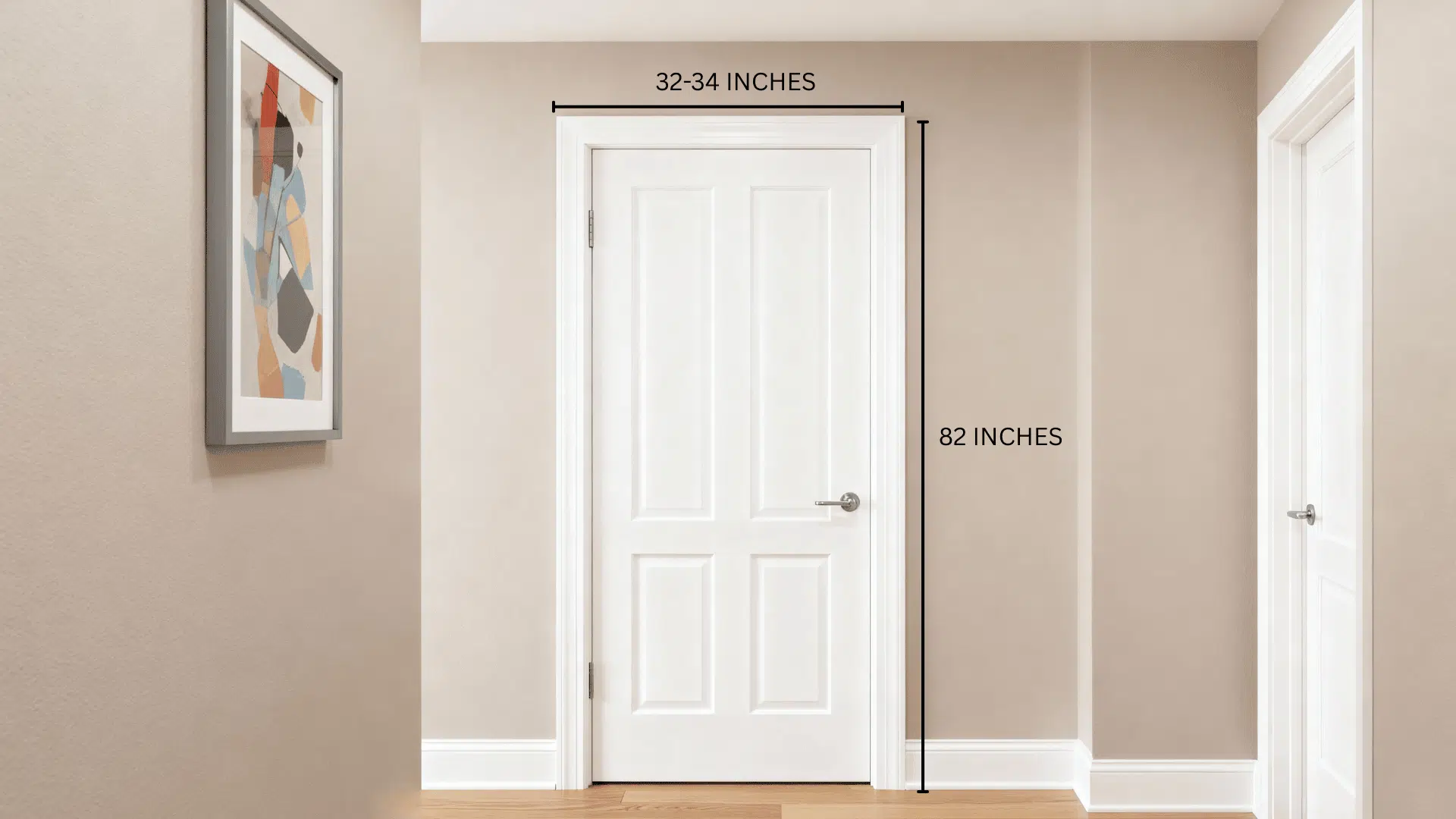
Bedroom doors balance privacy with easy access. You’ll find these throughout the sleeping areas of your home.
They’re slightly narrower than entry doors but still comfortable to walk through.
- Frame width: 32-34 inches (rough opening)
- Frame height: 82 inches (rough opening)
- Jamb depth: 4-9/16 inches
- Door thickness: 1-3/8 inches
3. Bathroom Door
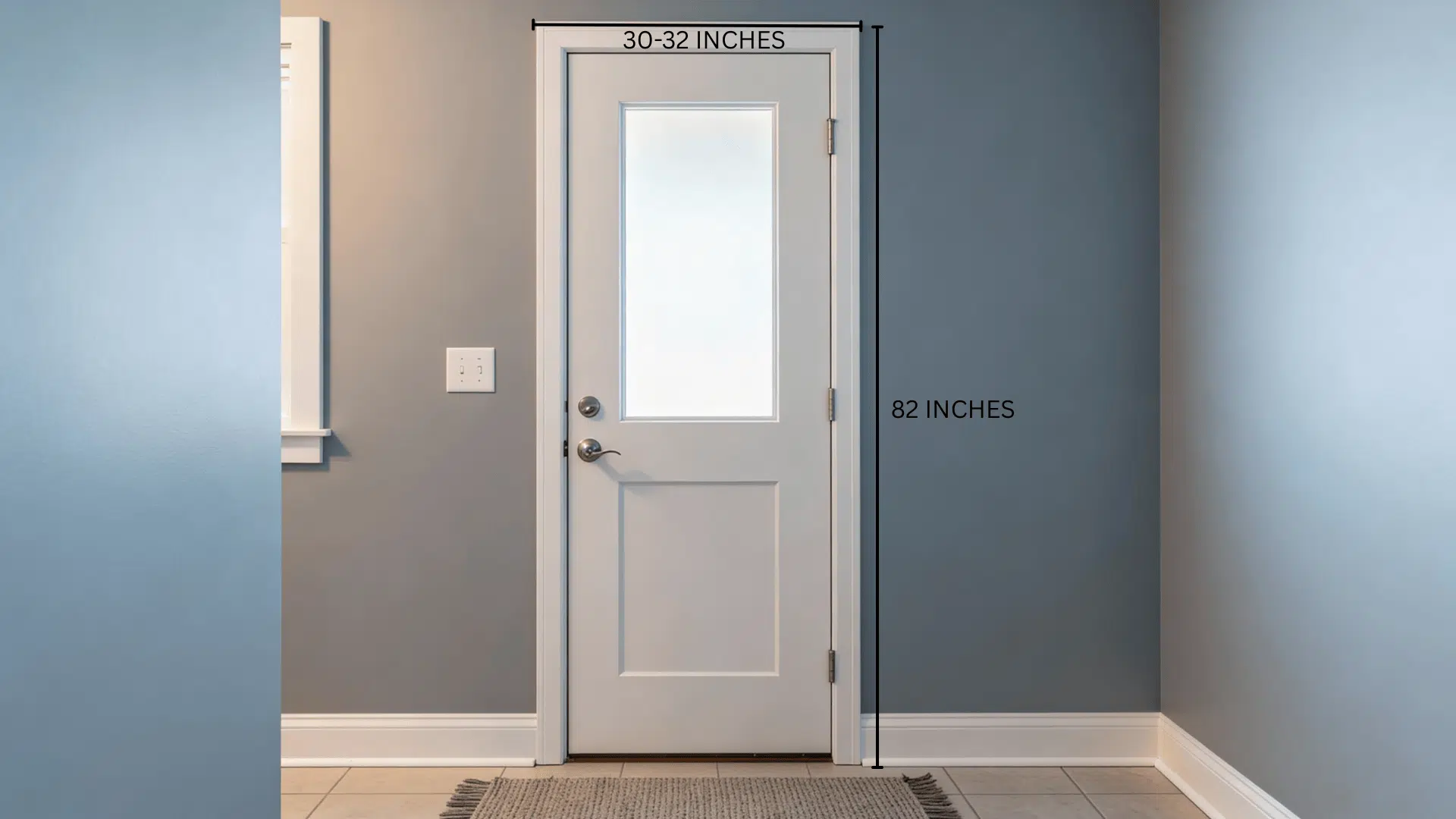
Bathroom doors are often the smallest in your house. They fit tighter spaces while still allowing access.
Many people choose 30-inch doors for half baths.
- Frame width: 30-32 inches (rough opening)
- Frame height: 82 inches (rough opening)
- Jamb depth: 4-9/16 inches
- Door thickness: 1-3/8 inches
4. Closet Door
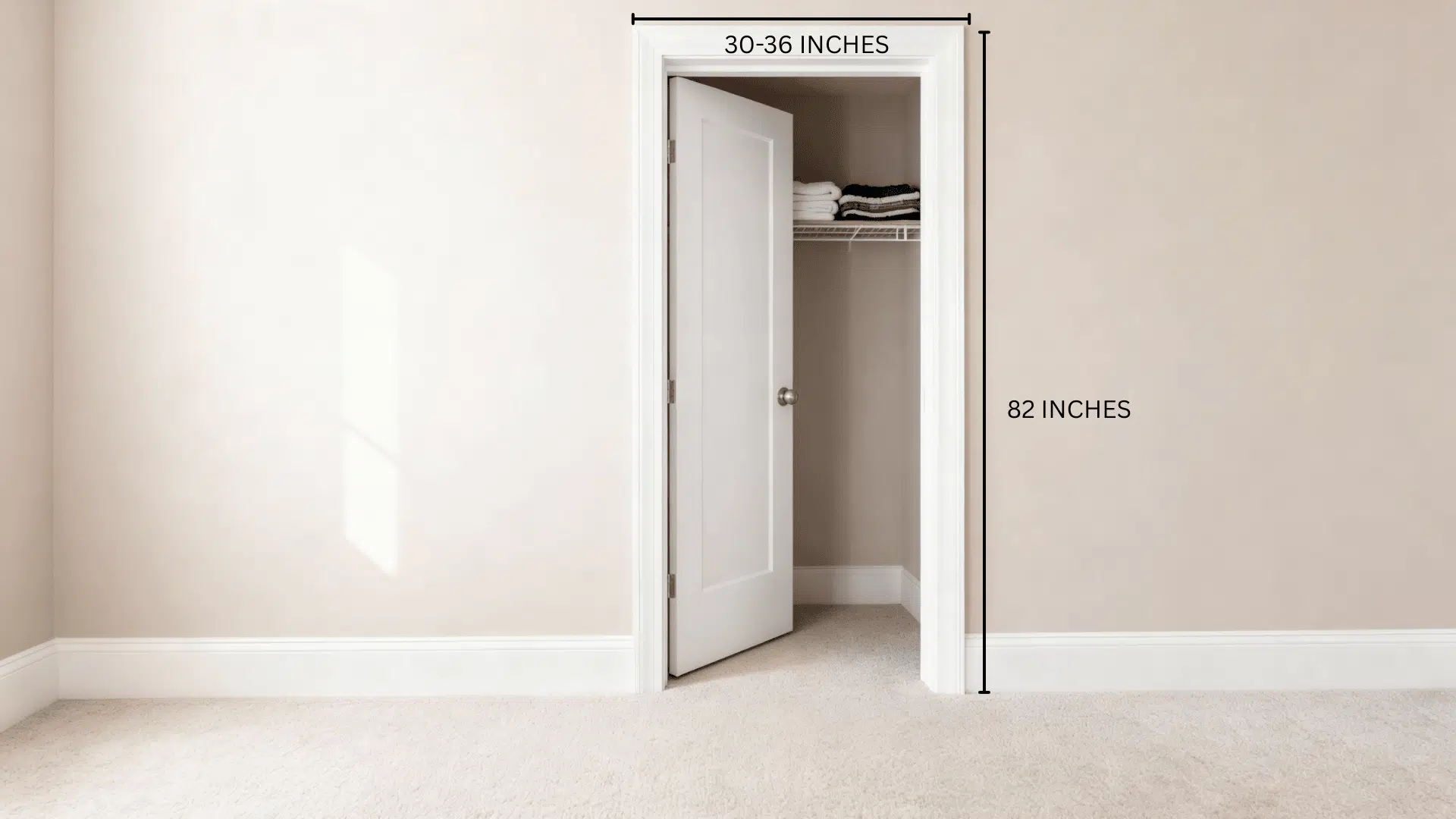
Closet doors come in various styles, like bifold or sliding.
The frame size depends on how much storage you’re accessing. Smaller closets use 24-30 inch openings.
- Frame width: 30-36 inches (rough opening)
- Frame height: 82 inches (rough opening)
- Jamb depth: 4-9/16 inches
- Door thickness: 1-3/8 inches
5. Patio Door
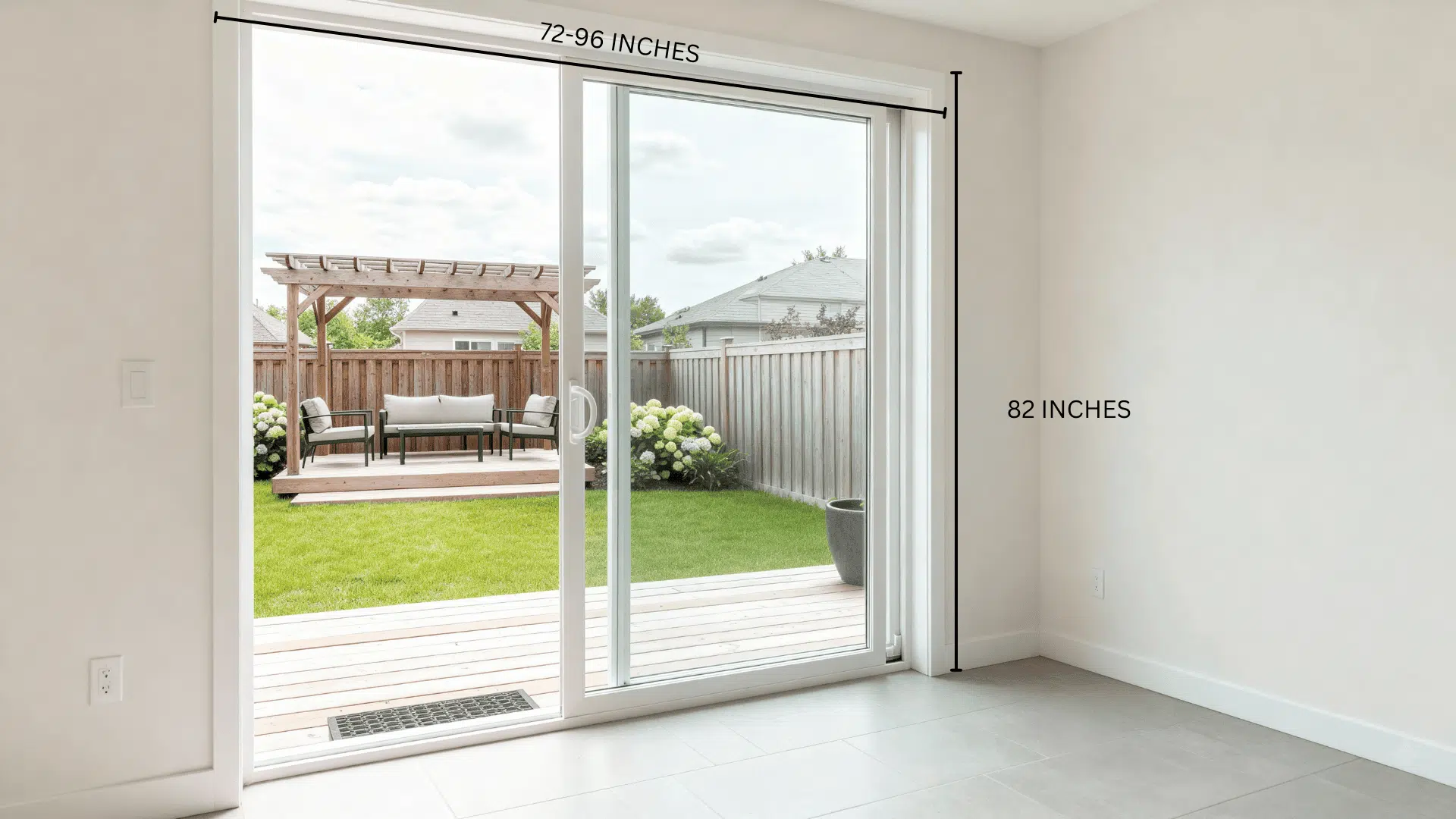
Patio doors connect your indoor and outdoor spaces.
They’re much wider than regular doors and often come as sliding or French door styles. These need reinforced frames for the extra weight.
- Frame width: 72-96 inches (rough opening)
- Frame height: 82 inches (rough opening)
- Jamb depth: 5-1/4 to 6-9/16 inches
- Door thickness: 1-3/4 inches
6. Double Entry Door
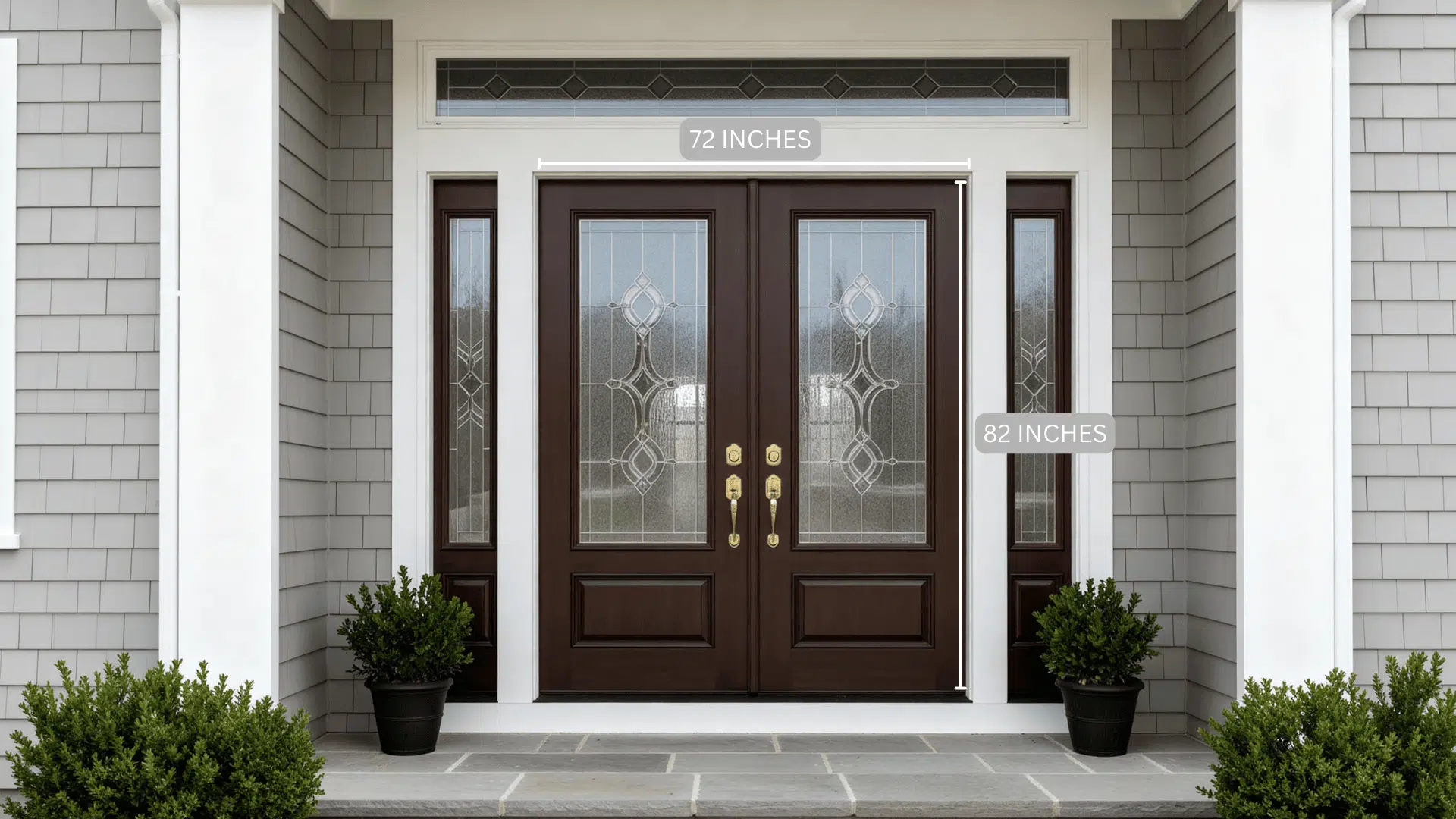
Double entry doors make a statement at your home’s entrance. They provide a grand look and extra width for moving large items.
Churches and upscale homes often feature these.
- Frame width: 72 inches (rough opening)
- Frame height: 82 inches (rough opening)
- Jamb depth: 5-1/4 to 6-9/16 inches
- Door thickness: 1-3/4 inches
7. Pantry Door
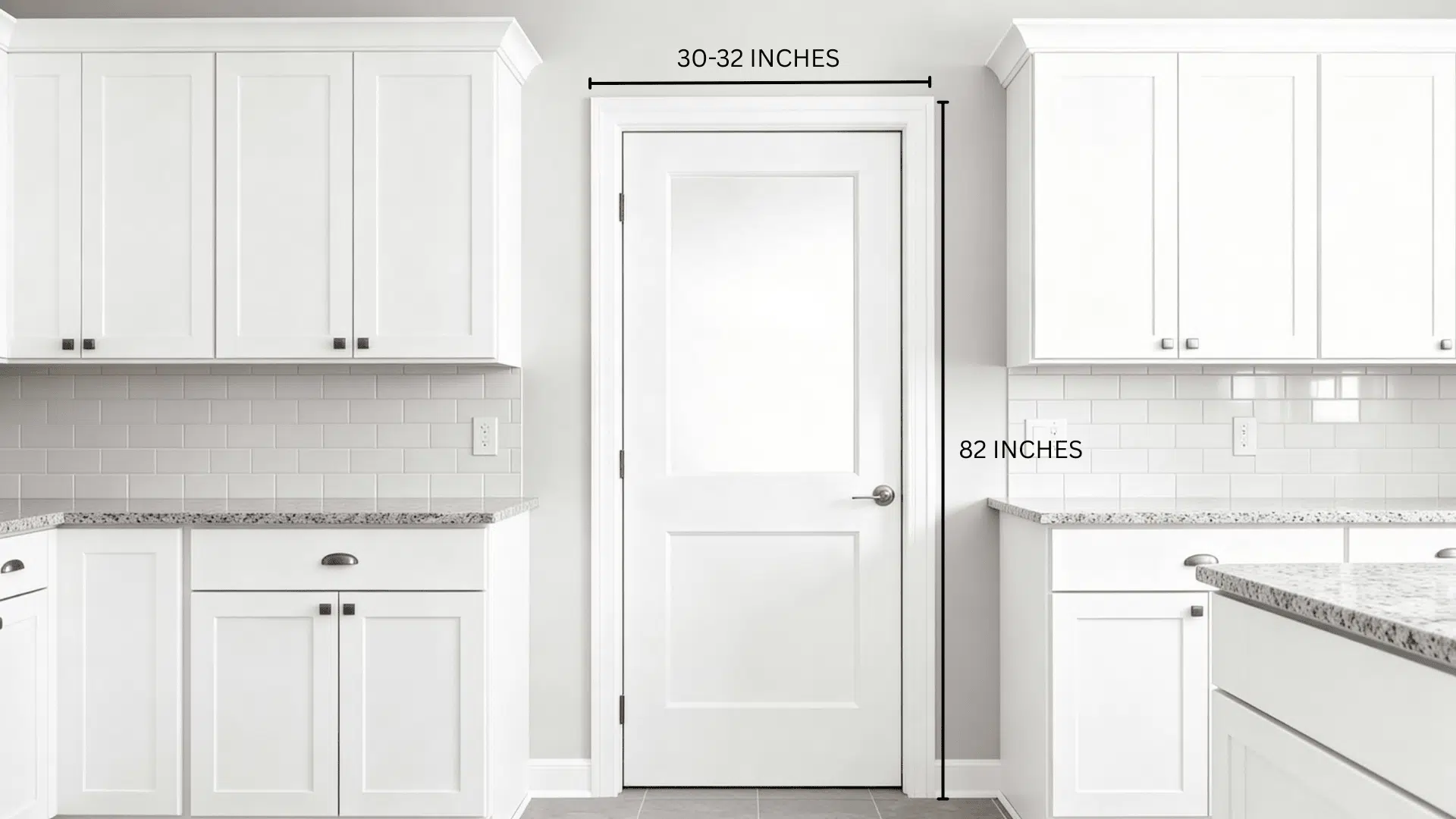
Pantry doors are similar to closet doors but might be wider for easier access with groceries.
Some people install barn-style doors here. The frame needs to support frequent use.
- Frame width: 30-32 inches (rough opening)
- Frame height: 82 inches (rough opening)
- Jamb depth: 4-9/16 inches
- Door thickness: 1-3/8 inches
8. Basement Door
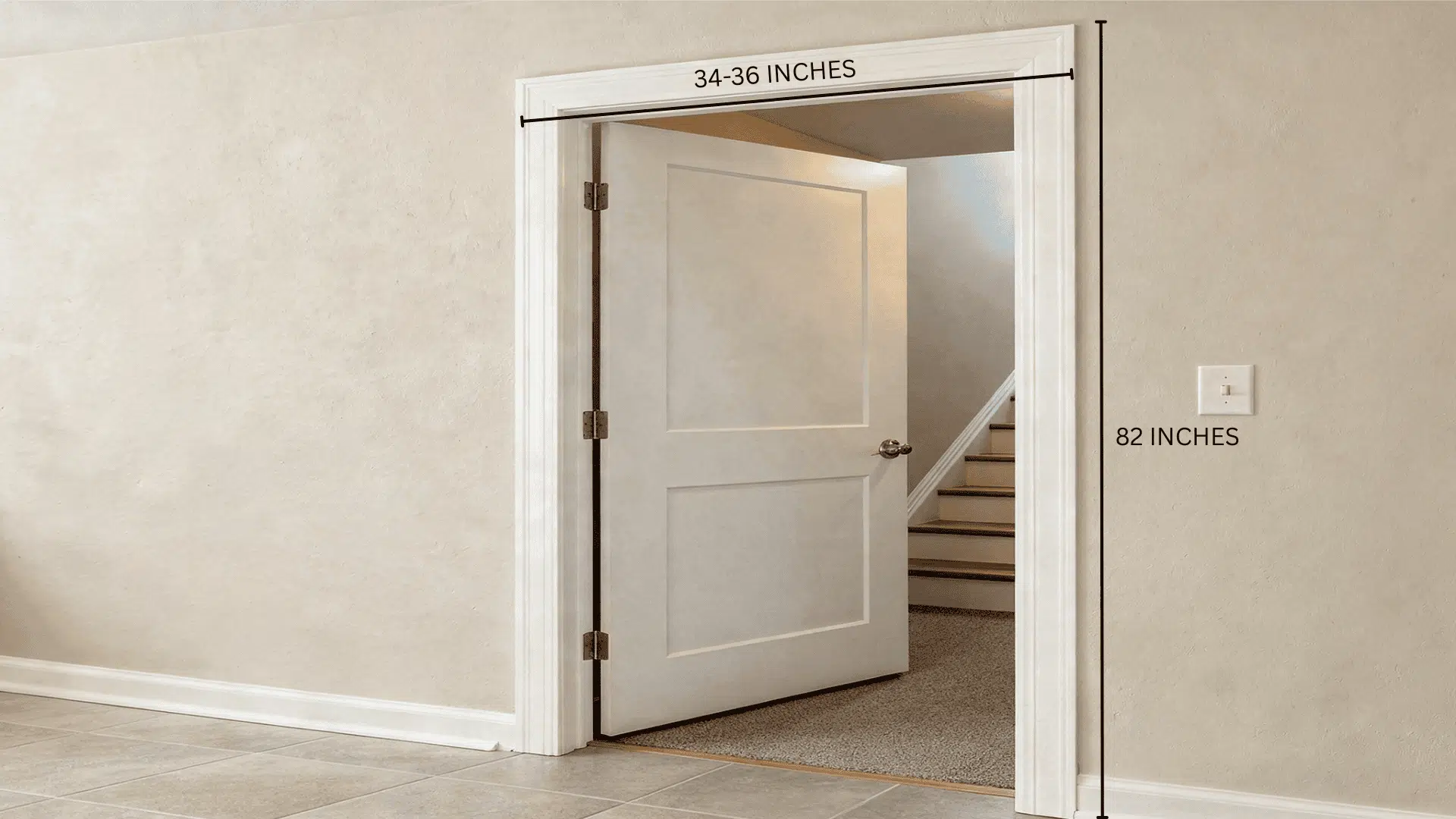
Basement doors are usually exterior-grade indoors, needing stronger frames due to temperature and moisture.
Many codes require fire-rated options.
- Frame width: 34-36 inches (rough opening)
- Frame height: 82 inches (rough opening)
- Jamb depth: 4-9/16 to 6-9/16 inches
- Door thickness: 1-3/4 inches
9. French Door
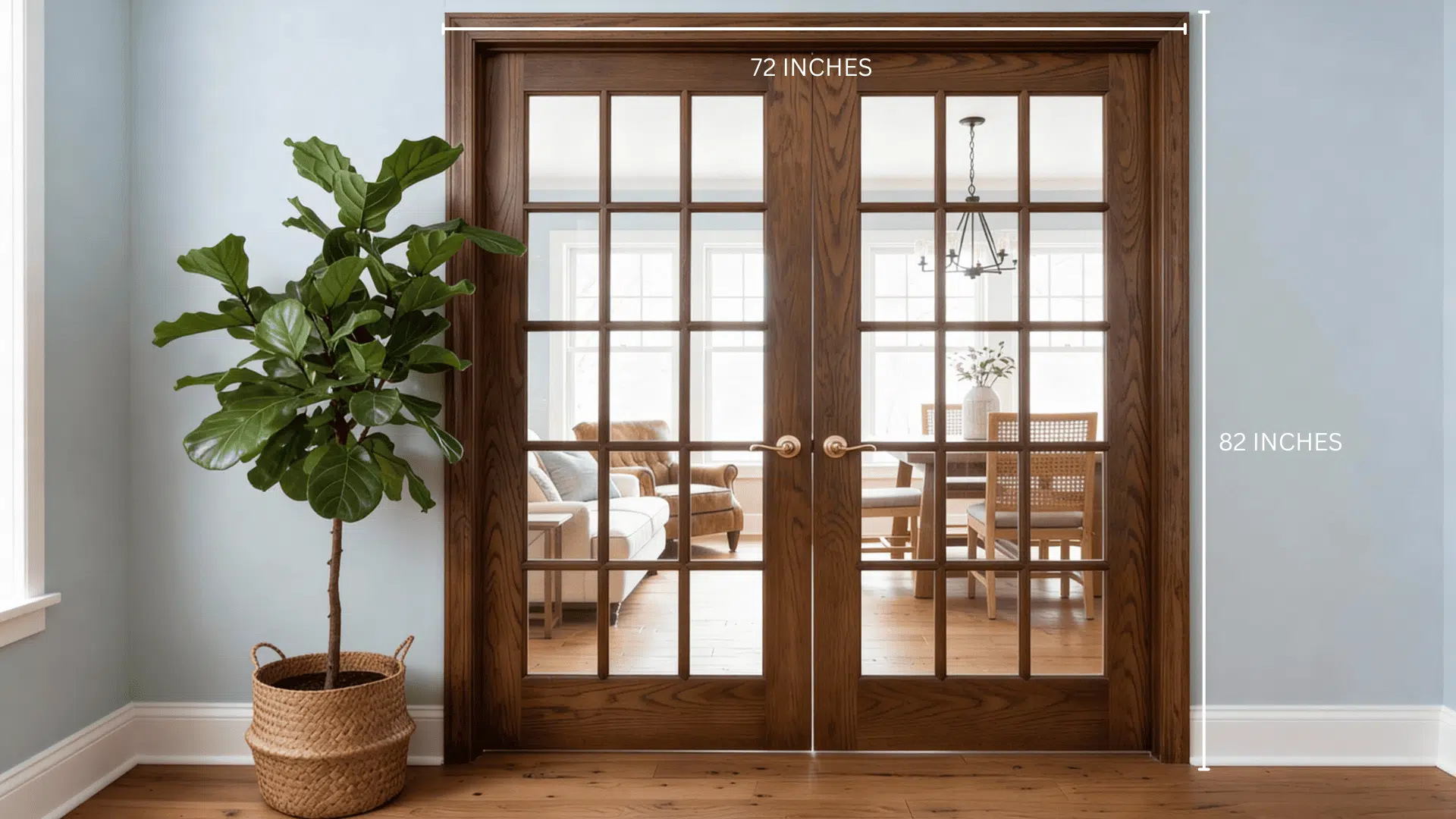
French doors add style with their glass panels. They usually come in pairs and create an open feel between rooms.
The frame must support the extra weight of the glass.
- Frame width: 72 inches total (rough opening for pair)
- Frame height: 82 inches (rough opening)
- Jamb depth: 4-9/16 to 6-9/16 inches (depends on location)
- Door thickness: 1-3/4 inches
Determining the Swing or Hinging of a Door
Knowing which way your door swings helps you choose the right frame and hardware.
Here’s a quick reference table for door swing types and their specifications.
| Door Swing Type | Hinge Location | Opening Direction | Common Use | Frame Clearance Needed |
|---|---|---|---|---|
| Left-hand inswing | Left side | Opens into the room, hinges on the left | Bedrooms, bathrooms | 2 inches on the hinge side |
| Right-hand inswing | Right side | Opens into the room, hinges on the right | Bedrooms, offices | 2 inches on the hinge side |
| Left-hand outswing | Left side | Opens away from the room, hinges on the left | Exterior doors, closets | 2 inches on the hinge side |
| Right-hand outswing | Right side | Opens away from the room, hinges on the right | Exterior doors, patios | 2 inches on the hinge side |
| Double swing | Both sides | Opens both directions | Kitchen doors, saloons | 1 inch clearance on each side |
How to Measure a Door Frame Correctly
Measuring your door frame accurately saves you from headaches later. Here’s the process to follow every time.
- Step 1: Grab a tape measure, pencil, and paper to record your measurements.
- Step 2: Measure the width at three points: top, middle, and bottom of the frame opening.
- Step 3: Measure the height on both the left and right sides of the frame.
- Step 4: Record the shorter height measurement for the same reason as the width.
- Step 5: Measure the jamb depth from the inside edge to where it meets the wall.
- Step 6: Measure the diagonal distances from corner to corner to confirm the frame is square.
- Step 7: Add 2 inches to your door width and height to get the rough opening size.
- Step 8: Double-check all measurements before ordering your new door or frame
What Other Factors Affect Door Frame Sizes?
Door frame dimensions aren’t just about standard measurements. Several other factors come into play when choosing the right size for your space.
Wall Thickness
Your wall thickness directly impacts jamb depth. Thicker walls need deeper jambs to cover the entire width adequately.
Interior walls are typically 4-1/2 inches thick, while exterior walls can be 6 inches or more.
Local Building Codes
Building codes vary by location and dictate minimum door sizes.
Fire safety regulations might require wider frames in certain areas. Always check with your local building department before installing or replacing frames.
Accessibility Requirements
ADA compliance requires 32 inches of clear width for wheelchair access.
This means you’ll need at least a 36-inch door frame. Public buildings and some residential spaces must follow these guidelines.
Header Load Requirements
Load-bearing walls need stronger headers above the door frame. The weight from above affects how wide you can make the opening.
Structural engineers calculate the proper header size for your specific situation.
Climate and Weather Conditions
Extreme temperatures cause wood frames to expand or contract.
Humid climates might require metal or composite frames instead. Weather stripping also adds to the overall frame dimensions for exterior doors.
Furniture and Appliance Access
Consider what needs to pass through the doorway regularly. Moving a couch or refrigerator requires wider frames.
Always recommend measuring your most essential furniture pieces before finalizing frame sizes.
Mistakes to Look Out For
- Forgetting to account for the flooring thickness when measuring height.
- Ordering the door size instead of the rough opening size.
- Ignoring wall thickness when selecting jamb depth.
- Measuring from the outside of the trim instead of the actual opening.
- Overlooking the door swing direction before ordering hardware.
- Failing to verify local building code requirements first.
- Not leaving enough clearance for carpet or rugs under the door.
- Mixing up interior and exterior frame specifications.
- Forgetting to measure the header space above the door.
- Installing frames without checking if the walls are plumb and level.
- Not accounting for the thickness of drywall or plaster on walls.
Final Thoughts
Getting door frame dimensions right isn’t complicated once you know the basics.
You now know the standard sizes, how to measure correctly, and what factors influence your choices. If replacing an old frame or installing a new one, these measurements will show you.
Check your wall thickness, consider your flooring, and verify local codes before buying materials.
Small mistakes in measurement can lead to big problems during installation.
If you’re still unsure about your specific situation, I’d recommend consulting a professional.
Frequently Asked Questions
How do Door Jambs Affect Door Frame Sizes?
Jambs add depth to frames, matching your wall thickness for proper fit.
What Should the Height of my Door Handle be?
Standard door handles sit 36 inches above the floor for comfortable use.
Door Frame Dimensions in Inches
Standard frames measure 38 inches wide by 82 inches tall for most doors.